
Quick answer
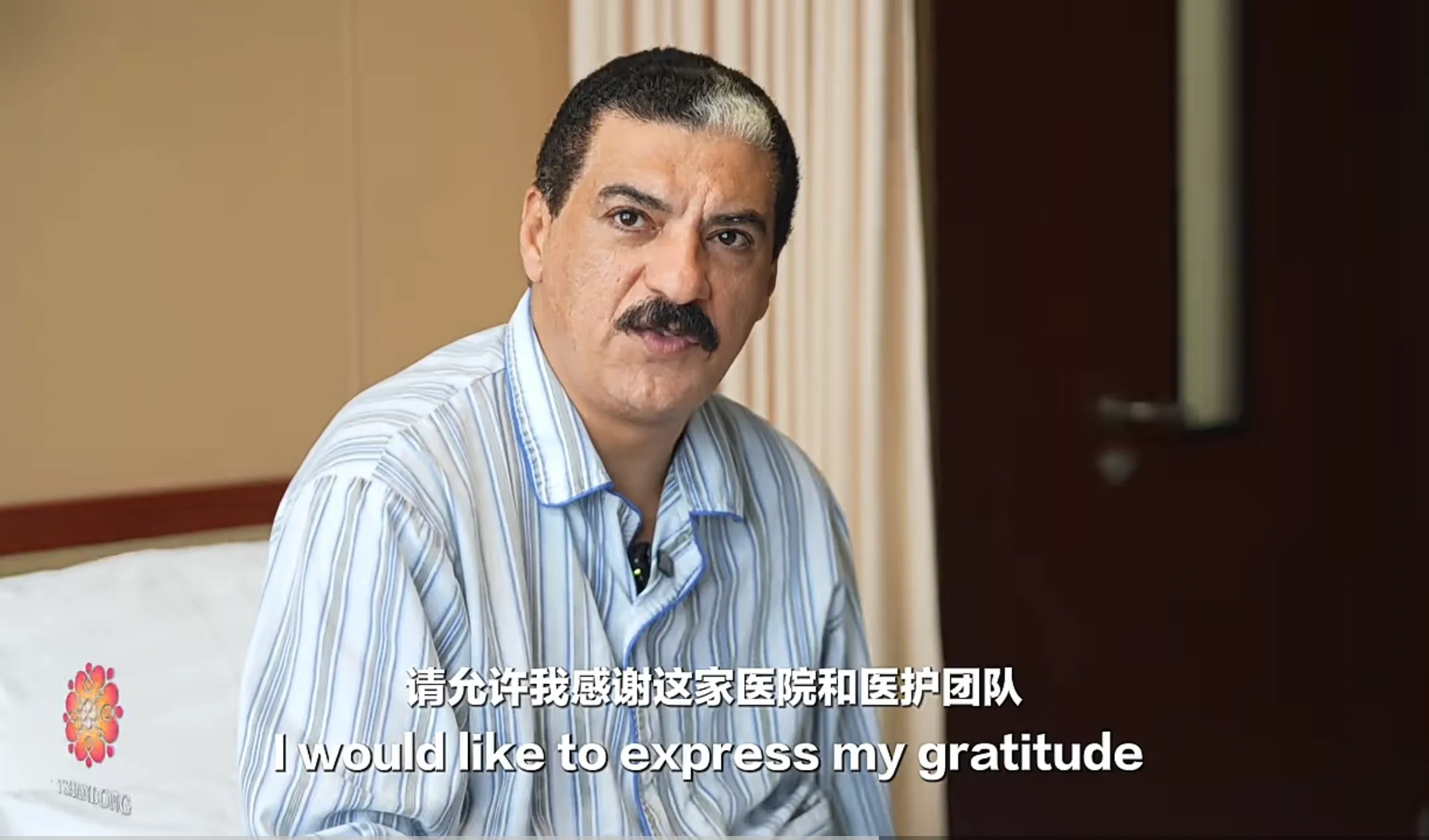
Yase Muhammad, a Jordanian businessman, cut his left hand about three years ago. The hospital in Jordan closed the skin but did not repair the damaged nerve, and one finger never straightened again. Doctors he consulted at home told him nothing could be done. He was in China on business in 2026 when a Liaocheng partner suggested he have it looked at before flying home. Surgeons at the Beijing Jishuitan Hospital Liaocheng Hospital repaired the nerve and released the stiffened joint capsule; four days after the operation he could bend and straighten the finger again [1].
Key takeaways
- Injury: a laceration of the left hand about three years ago, treated in Jordan with skin closure only [1].
- Consequence: no nerve repair, so the finger lost sensation and could not fully flex or extend [1][2].
- Route to surgery: not a medical-travel arrangement, but a business trip and a Liaocheng friend who knew the hospital [1].
- Operation: hand function reconstruction — nerve repair plus release of adherent joint capsule, planned through a formal multidisciplinary review [1].
- Early result: at four days, wound healing was good and finger movement had clearly improved; rehabilitation continues [1].
How it happened
The account comes from a Shandong International Communication Centre video report, which interviews the patient, his friend, his business partner, the surgeon and a nurse. It reports only the first four days after surgery; there is no follow-up beyond that [1].
| When | What happened |
|---|---|
| About 3 years ago | A cut to the left hand in Jordan. The local hospital sutured the skin; the damaged nerve was not repaired [1]. |
| Since then | Persistent loss of sensation in the fingers and limited movement. The little finger could not be straightened [1][2]. |
| In Jordan | Several doctors were consulted. According to his friend Ibrahim, "we asked some doctors in Jordan, they all said no" [1]. |
| 2026, business trip | He travelled to China for work. A business partner in Liaocheng, Mr Fu, noticed the hand and suggested a consultation before he returned [1]. |
| Referral | Mr Fu, who is from Liaocheng, recommended the local hospital on the strength of its Jishuitan affiliation: "I came for Jishuitan's reputation" [1]. |
| Assessment | Zhao Yingbo, associate chief physician in hand and microsurgery, found a nerve-injury pattern: the finger could not extend, and flexion was restricted [1][2]. |
| Planning | The hospital's medical affairs office convened a multidisciplinary review and a detailed surgical plan before the operation [1]. |
| Surgery | Hand function reconstruction: the injured nerve was repaired and the adherent joint capsule released [1]. |
| Day 4 | Wound healing good; finger flexion and extension clearly better. A rehabilitation therapist was to take over to consolidate the result [1]. |
The hospital he was sent to is not a local clinic with a famous name above the door. It opened in January 2024 as a national regional medical centre, built by the city and managed and run by Beijing Jishuitan Hospital, with 1,200 beds and Beijing consultants posted on site full time rather than visiting occasionally [4]. Its hand and microsurgery department runs 64 beds and more than 3,000 operations a year, with three chief physicians and six associate chief physicians [3].
What went wrong the first time
The failure in this case is a familiar one in hand surgery: a wound that looks closed is taken as a wound that is treated. When a laceration divides a nerve, closing the skin does nothing for the nerve, and the window in which repair gives the best result closes month by month [5][6].
Three years is well beyond that window. Muscle in the finger has been without a signal for long enough to waste, joints stiffen when they are not moved through their range, and scar tissue binds the tendon and capsule to the surrounding tissue. That is why the second operation was not simply "repair the nerve" but a reconstruction: restore the nerve, then free everything that had stiffened around it [1][5].
The surgeon's own description on camera was factual rather than dramatic — the little finger could not be straightened, flexion was limited, and this was the sequela of the nerve injury [1].
What the second operation did — and what it did not
The operation had two components: nerve repair, and release of the joint capsule that had become adherent. Both are needed for a finger that has neither sensation nor full movement; repairing the nerve alone would leave a finger that could feel but not move properly [1].
What the reporting shows is early motor improvement: by day four he could bend and straighten the finger, and the wound was healing. What it does not show is sensation returning — nerve regrowth is slow, measured in millimetres per day, and sensory recovery after a three-year delay is the least predictable part of the whole exercise [5][6].
He said it himself in the video: "This finger couldn't move at all before. Now I can bend it, and straighten it" [1]. That is a statement about movement on day four, not a prognosis.
What this case shows, and what it does not
It shows that a "no" given in one country is a statement about that country's options, not a law of nature. It also shows how most cross-border cases actually begin: not with a medical-travel agency, but with a business trip and a friend who happens to live near the right hospital [1].
It does not show that late nerve repair restores a hand. One finger, four days, no sensory testing, no grip measurement and no follow-up: this is a case report from the treating hospital, delivered as a video feature [1].
Nor does it show that the treatment was unavailable elsewhere. The operation Zhao performed is standard hand surgery; what was unusual was that nobody in Jordan offered it, and that the patient happened to be in Shandong when someone did [1][5].
The condition in context: missed nerve injuries in the hand
A cut hand can divide a nerve and still look minor. The signs are numbness in a specific part of a finger or palm, and weakness or loss of a particular movement. Repair works best early, before the nerve stumps retract and the target muscle wastes [5][6].
| Question | What the sources support | Source |
|---|---|---|
| Why did the finger stop moving? | The nerve was cut and never repaired, so the muscle lost its signal | [1][5] |
| Why can it not straighten? | Nerve injury plus a joint capsule that stiffened over three years | [1] |
| Does late repair work? | It can restore some movement, but sensory recovery is less predictable and slower | [5][6] |
| What else is needed? | Rehabilitation, because the operation restores continuity, not strength | [1] |
If you were this patient: what to arrange
- Get the original wound records. What was repaired and what was not decides what can be done now [1].
- Ask for a nerve assessment, not just an X-ray. Sensation mapping and muscle testing are what identify a missed nerve injury [5].
- Expect a reconstruction, not a single repair. Three years on, releasing stiff tissue is usually part of the operation [1].
- Plan rehabilitation from day one. In this case a therapist was scheduled immediately to consolidate the surgical result [1].
- Check that language will not be the bottleneck. This patient spoke little Chinese or English; the ward used translation software and gestures, and it took about two days to establish communication [1].
Availability and limits
- This is an editorial summary of a hospital video report, not a clinical record [1].
- The patient is named and filmed with his consent; the clinical description comes from the operating surgeon [1].
- Only four post-operative days are reported; there is no sensory testing, grip measurement or follow-up [1].
- No cost information has been published.
- Nerve surgery outcomes vary with the nerve involved, the level of injury and the delay; one case cannot set expectations [5][6].
- The hospital says it plans an international clinic; as of this report there is no dedicated international department [1].
What to ask before booking
| Question | Why it matters |
|---|---|
| Which nerve is damaged, and how was that confirmed? | The operation and the prognosis both depend on it [5]. |
| Is the plan repair, graft, transfer or reconstruction? | After three years the options change [1][6]. |
| Which department handles foreign patients, and in what language? | The hospital is a working hospital we do not book; confirm international-department coordination and language support. |
| How much sensation is realistically recoverable, and over how long? | Movement and feeling recover on different timelines [5][6]. |
| What rehabilitation will I need, and where? | Surgery restores continuity; therapy restores use [1]. |
Questions patients ask
What exactly was wrong with the hand?
A cut about three years earlier had been closed without repairing the nerve. The finger lost sensation and could not fully straighten or bend, and the joint capsule had stiffened [1].
What did the operation involve?
Hand function reconstruction: the injured nerve was repaired and the adherent joint capsule released, after a multidisciplinary review and a detailed surgical plan [1].
How much movement came back?
By the fourth day after surgery he could bend and straighten the finger, and the wound was healing. No longer-term measurement has been published [1].
Will sensation come back too?
That is the least predictable part. Nerves regrow slowly, and recovery after a three-year delay is usually incomplete; the report does not test sensation [1][5].
How did he end up in a Chinese hospital?
He was on a business trip. A Liaocheng partner noticed the hand and recommended the local Jishuitan-affiliated hospital, which he chose on the strength of that reputation [1].