
Quick answer
Chinese hospitals hold large numbers of in-house preparations — formulae made in their own pharmacy and used for decades, which cannot legally be sold outside the institution. Turning one into a licensed drug requires pharmaceutical development, standardisation, toxicology and a clinical trial, typically costing tens of millions of yuan over years. Hubei Provincial Hospital of Chinese Medicine has signed with an industry partner and committed 4 million yuan to take Jinju Xiaocuo tablet, its acne preparation, through that process. The plan was described by hospital president He Xiaoming in a Hubei Daily interview [1][2][5].
Key takeaways
- Product: Jinju Xiaocuo tablet, a hospital preparation used for acne [1][2].
- Status: development and regulatory submission, under an agreement with a pharmaceutical company [1][2].
- Investment: 4 million yuan planned for the new drug development and approval process [1][2].
- Context: one of several translation projects at the hospital, alongside Qingfei Dayuan granules [1][2].
- No marketing approval has been announced [1][5].
What "new drug development" actually involves
A hospital preparation is exempt from the evidence required of a marketed medicine because it is used under the institution's own supervision. Converting it means fixing the formula and its sourcing, developing a stable dosage form, defining quality markers, running toxicology, and then a clinical trial — for a traditional medicine, often a randomised trial against placebo or an active comparator [3][5].
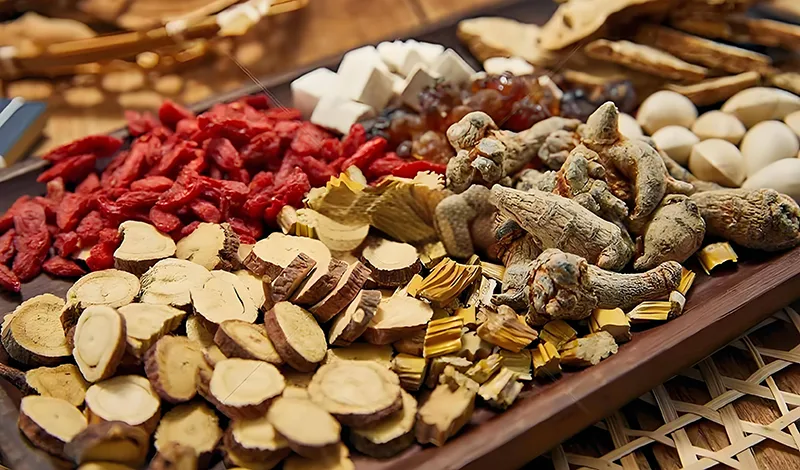
Four million yuan is a modest budget for that pathway by pharmaceutical standards, which suggests either a classical, well-documented formula requiring a lighter evidence package, or a staged programme where this sum covers an early phase. The sources reviewed do not specify which, and the figure should be read as the hospital's stated commitment rather than the total cost [1][2].
Why acne is a reasonable target
Acne is extremely common, chronic through adolescence and often into adulthood, and existing treatments have real limitations: topical retinoids irritate, antibiotics drive resistance, and isotretinoin is teratogenic and requires monitoring. A well-tolerated oral option would address a genuine gap — but the bar for evidence is the same as for any drug, and dermatology has a long history of plausible remedies that failed controlled trials [3][4].
There is no published trial of Jinju Xiaocuo tablet in the sources reviewed, and no regulatory filing has been announced. Hospital-preparation use over years is uncontrolled experience, which can generate hypotheses but cannot establish efficacy — acne fluctuates, and both patients and clinicians expect improvement. Readers should treat this as a pipeline item: the outcome will be determined by the trial data, whenever those appear [1][5].
The condition in context: acne
Acne affects the majority of adolescents and a substantial minority of adults, with psychological as well as dermatological consequences.
| Region | What the data shows | Source |
|---|---|---|
| Standard care | Topical retinoids, benzoyl peroxide, antibiotics and isotretinoin, each with limitations [4]. | Tencent Medical Encyclopedia [4] |
| Antibiotic resistance | Long-term oral antibiotics are discouraged for this reason [4]. | Tencent Medical Encyclopedia [4] |
| Hospital context | The hospital reports more than 400 funded research projects and 18 provincial or ministerial science awards [2]. | Hubei Daily [2] |
Because acne is chronic and visible, adherence to irritating topicals is poor, which is exactly where a better-tolerated oral option would help [3][4].
Why it matters
| Potential | What the report suggests | Source |
|---|---|---|
| Access | A licensed drug could be prescribed outside the originating hospital [1]. | [1] |
| Standardisation | Quality control replaces pharmacy-level variation [3]. | [3] |
| Caution | No efficacy or approval data yet [5]. | [5] |
Availability and limits
- This is an editorial summary of hospital reporting, not a product endorsement [1][2].
- The tablet is not approved for marketing [5].
- No trial results are available [5].
- Hospital preparations are dispensed only within the institution [3].
- Herbal products can interact with other medicines and affect liver enzymes [3].
What to ask before booking
| Question | Why it matters |
|---|---|
| Is the tablet available outside this hospital? | Hospital preparations are institution-limited [3]. |
| What evidence supports it for my acne severity? | No controlled trial is published [5]. |
| Which department handles foreign patients, and in what language? | The hospital is a working hospital we do not book; confirm international-department coordination and language support. |
| What are the standard options for my acne grade? | Guideline therapy should be considered first [4]. |
Questions patients ask
What is Jinju Xiaocuo tablet?
A hospital preparation used at Hubei Provincial Hospital of Chinese Medicine for acne, now being developed as a licensed new drug [1][2].
Has it been approved?
No — the hospital has announced a development and submission programme, not an approval [1][5].
How much is being invested?
4 million yuan is the stated commitment under an agreement with a pharmaceutical company [1][2].
Is there evidence it works?
No controlled trial has been published in the sources reviewed; hospital use is uncontrolled experience [5].
Is this relevant to international patients?
It is useful context for China's hospital-to-industry drug translation. The hospital is a working hospital we do not book — contact its international department directly [1].