
Quick answer
Inhaled therapy is the backbone of COPD and asthma treatment, and it fails for a reason that has nothing to do with the drug: most patients cannot use the device correctly. GOLD guidance states that roughly two thirds of patients worldwide do not master inhaler technique, and in routine practice correct use is often below 30%. A drug that never reaches the lung cannot help. On 19 November 2025, at the China COPD Conference, a teaching robot was launched that simulates where the drug lands in the lung, monitors inspiratory flow, and corrects the patient in real time — as part of a respiratory digital therapeutics centre led by the National Respiratory Medicine Centre at China-Japan Friendship Hospital [1][3][6].
Key takeaways
- Launched at the 2025 China COPD Conference on 19 November 2025 [1][6].
- Function: simulate pulmonary drug deposition, monitor inspiratory flow, provide real-time visual and auditory correction [1][2].
- Reported effect: correct technique rising from under 30% at baseline to above 50% after training [6].
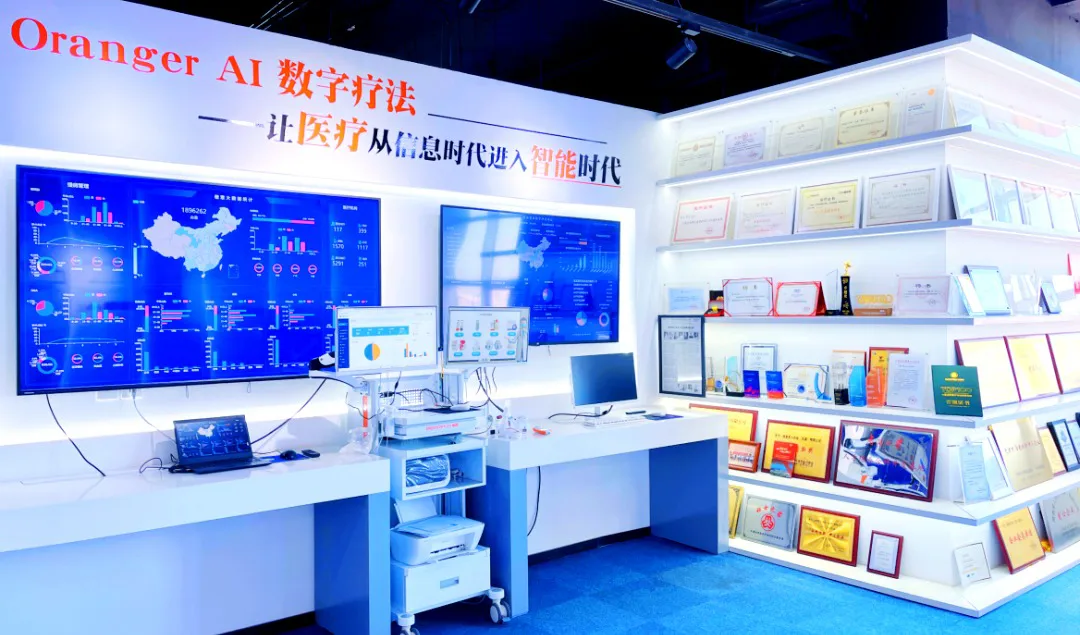
- Delivered within a digital therapeutics centre model built on "one network, one platform, one base" [1][5].
- The centre model has been implemented in more than 100 hospitals across 18 provinces [6].
Why the device, not the drug, is the problem
Each inhaler type has its own required manoeuvre: shake and breathe out, seal the lips, inhale at a specific flow rate, hold the breath, wait between puffs, rinse. Errors are common and silent — the patient feels the puff and assumes success. Clinicians have little time to teach, and teaching by description is unreliable [2][3].
The robot's contribution is feedback that the patient can see: deposition patterns that show a puff hitting the throat instead of the lung, and a flow curve that shows inhalation was too fast. That converts an invisible error into a correctable one [1][2].
What the reported improvement means
Moving from under 30% to over 50% correct technique is a large relative gain, and it addresses the commonest reason for "treatment failure" in COPD [6].
Correct technique is not the same as fewer exacerbations, better quality of life or lower mortality — and technique often decays within weeks of training unless reinforced. The reported validation is initial, without a randomised comparison or long-term follow-up in the sources reviewed. The robot was developed by a digital therapeutics company, with the national centre providing clinical leadership; that is a normal arrangement but means the performance claims originate with the developer. Access, cost and reimbursement are unresolved [2][5][6].
The condition in context: inhaler technique in COPD
COPD is among the leading causes of death worldwide, and China carries a large share of the burden.
| Region | What the data shows | Source |
|---|---|---|
| Global problem | About two thirds of patients do not use inhalers correctly, per GOLD guidance [6]. | Beijing News [6] |
| Baseline performance | Correct technique is commonly below 30% in routine practice [6]. | Beijing News [6] |
| Policy context | COPD has entered national basic public health services, with a "strengthening the base" programme [6]. | Beijing News [6] |
Because the intervention is training rather than a new molecule, the cost per patient is low relative to an added drug — provided the training is retained [3][5].
Why it matters
| Potential | What the report suggests | Source |
|---|---|---|
| Visible feedback | Patients see where the drug actually lands [1][2]. | [1][2] |
| Scalable model | Centre model deployed in over 100 hospitals [6]. | [6] |
| Caution | Surrogate endpoint; industry-developed [5][6]. | [5][6] |
Availability and limits
- This is an editorial summary of conference and press reporting, not a product recommendation [1][3].
- No randomised outcome data on exacerbations [6].
- Technique gains decay without reinforcement [3].
- Device availability and cost are unresolved, and 13-ministry backing does not itself provide reimbursement [4][5].
- The device supplements, but does not replace, clinician review [2].
What to ask before booking
| Question | Why it matters |
|---|---|
| Can someone watch me use my inhaler and correct it? | Demonstration beats description [3]. |
| Which device suits my inspiratory flow? | Some inhalers need a strong, fast inhalation [2]. |
| Which department handles foreign patients, and in what language? | The hospital is a working hospital we do not book; confirm international-department coordination and language support. |
| When will my technique be rechecked? | Skills decay within weeks [3]. |
Questions patients ask
What is the teaching robot?
A device that simulates where inhaled drug deposits in the lung, measures inspiratory flow and gives real-time feedback so patients can correct their technique [1][2].
How much does technique improve?
Initial validation reports correct technique rising from under 30% to above 50% [6].
Who developed it?
A digital therapeutics company, deployed within a centre model led by the National Respiratory Medicine Centre at China-Japan Friendship Hospital [1][6].
Does better technique improve outcomes?
That is the expected mechanism but not yet demonstrated in a randomised trial with exacerbation endpoints [6].
Is this relevant to international patients?
It is useful context for China's respiratory digital health. The hospital is a working hospital we do not book — contact its international department directly [1].