
Quick answer
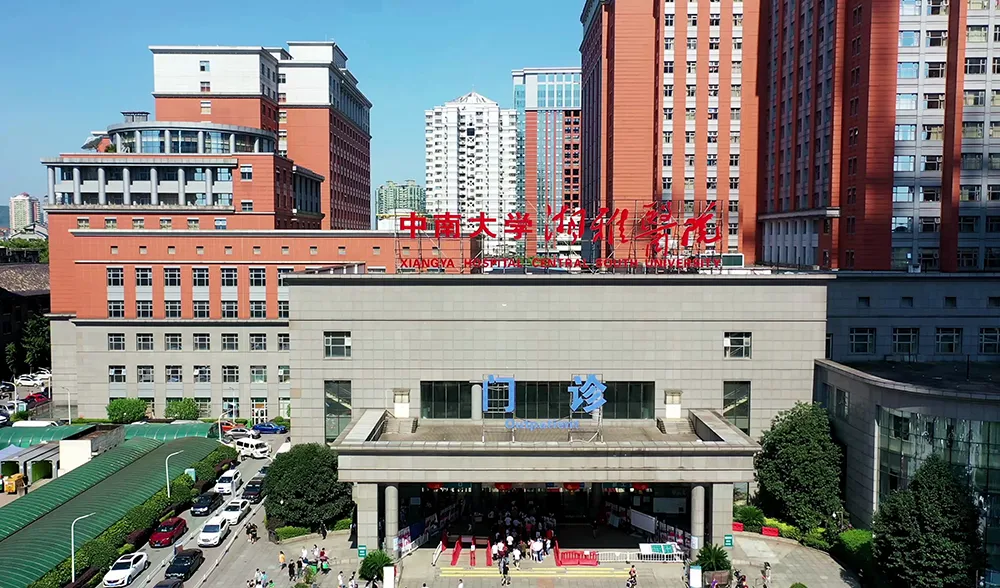
In Parkinson's disease the substantia nigra loses dopamine-producing neurons, and no existing drug replaces them — levodopa and infusions substitute for the missing dopamine but the cells keep dying. NCR201 takes the replacement literally: dopaminergic neuron precursor cells derived from induced pluripotent stem cells, transplanted into the brain by minimally invasive surgery. The first patient at Xiangya Hospital was treated on 19 November 2025; at three months the off-state motor score had fallen 26 points and the disease stage by one level, with no serious adverse events [1][2][4].
Key takeaways
- Product: iPSC-derived dopaminergic neuron precursor cells, given as NCR201 injection [3].
- First patient treated 19 November 2025; three-month follow-up reported in March 2026 [2][3].
- Off-state MDS-UPDRS III fell 26 points from baseline; Hoehn-Yahr stage fell by one [1][2].
- Non-motor symptom scores, anxiety, depression and quality-of-life measures all improved [1][2].
- Run jointly by Guo Jifeng's neurology team and Wang Yanjin's neurosurgery team; three patients had been dosed at the time of the report [3].
Why replace cells rather than supplement dopamine
Levodopa works until it does not: as the remaining neurons disappear, the therapeutic window narrows, dyskinesias appear and symptom control becomes erratic. Continuous infusions and device-aided therapy smooth this out but do not change the underlying loss. Cell replacement aims at the cause — restoring a population of cells that can produce and regulate dopamine locally, in response to physiological signals [1][4].
iPSCs avoid the ethical and supply problems of fetal tissue and can be manufactured at scale, which is why they have become the leading cell source internationally. The risks are equally well known: residual undifferentiated cells could form tumours, the graft could grow excessive or mispositioned dopamine neurons, and the immune response to the graft must be managed [3][4].
Reading the result carefully
A 26-point fall on the UPDRS III off-state score is large — well beyond the 5–10 points usually considered clinically meaningful — and a one-stage Hoehn-Yahr improvement is the kind of change patients notice. But three months is early in a cell therapy timeline, and several factors complicate interpretation: the surgery itself, changes in medication, and placebo effects from an invasive procedure in an open-label study [1][2].
This is a phase I safety and tolerability study; efficacy is a secondary question. Without a sham-controlled group, the magnitude of benefit cannot be attributed cleanly to the cells. Long-term questions — graft survival, tumour formation, dyskinesia from unregulated dopamine release, and the need for immunosuppression — will take years to answer. The team has since moved into phase II, but the results of that have not been reported [1][3][4].
The condition in context: Parkinson's disease
Parkinson's is the second commonest neurodegenerative disease, and its treatment has not changed fundamentally in fifty years.
| Region | What the data shows | Source |
|---|---|---|
| Global | More than 10 million people are affected worldwide [6]. | Cell research commentary [6] |
| Treatment limit | Existing drugs cannot halt progression of neuronal loss [4]. | China Medical Tribune [4] |
| China | The NCR201 trial is registered and has advanced to phase II [5][6]. | Cell research commentary [6] |
Because the pathology is a loss of one identifiable cell type in one identifiable region, Parkinson's has long been considered the most tractable target for cell replacement [4].
Why it matters
| Potential | What the report suggests | Source |
|---|---|---|
| Mechanism | Replaces lost neurons rather than substituting dopamine [1]. | [1] |
| Source | iPSCs offer a scalable, standardisable cell supply [3]. | [3] |
| Caution | Single patient, open label, three months [2]. | [2] |
Availability and limits
- This is an editorial summary of hospital and trial reporting, not a treatment offer [1][2].
- The therapy is in clinical trials, not approved [3].
- It requires neurosurgery and, usually, immunosuppression [4].
- Long-term safety data, including tumour risk, do not yet exist [3].
- Families should be wary of unregulated stem cell clinics offering Parkinson's treatment [6].
What to ask before booking
| Question | Why it matters |
|---|---|
| Is a trial open, and at which phase? | Only research participation is possible [3]. |
| What immunosuppression would I need, and for how long? | It carries its own risks [4]. |
| Which department handles foreign patients, and in what language? | Xiangya is a working hospital we do not book; confirm international-department coordination and language support. |
| What surveillance is planned for tumour formation? | It is the main long-term safety concern with iPSC products [3]. |
Questions patients ask
What is NCR201?
An injectable product of dopaminergic neuron precursor cells derived from induced pluripotent stem cells, transplanted surgically into the brain for Parkinson's disease [3].
What were the results?
At three months, off-state MDS-UPDRS III fell 26 points, Hoehn-Yahr stage fell by one, non-motor symptoms and quality of life improved, and no serious adverse events occurred [1][2].
Is this a cure?
No — it is a first-in-human safety study in a small number of patients; efficacy requires controlled trials [2][3].
Who runs the trial?
Guo Jifeng's neurology team and Wang Yanjin's neurosurgery team at Xiangya Hospital [3].
Is this relevant to international patients?
It is useful context for China's cell therapy research. Xiangya is a working hospital we do not book — contact its international department directly [1].