
Quick answer
Most acute respiratory infections are viral or self-limiting, yet antibiotic prescribing in Chinese township clinics has historically exceeded 80% for these consultations. Guidelines exist; they do not change behaviour on their own. A team led by Zhong Nanshan at the First Affiliated Hospital of Guangzhou Medical University, with the University of Toronto and Yuebei People's Hospital, tested a digital stewardship package in 34 township health centres. Over 12 months, prescribing fell from 83% to 26% in intervention clinics, versus 71% in controls, with no increase in hospitalisation or cost. It was published in Nature Medicine on 28 February 2026 [1][2][4].
Key takeaways
- Design: 12-month cluster randomised trial in 34 township health centres in Nanxiong and Lechang, Guangdong; 17 intervention, 17 control [4][6].
- Scale: more than 97,000 eligible acute respiratory infection consultations analysed [5].
- Result: antibiotic prescribing 83% to 26% in the intervention arm versus 71% in controls — a 57 percentage-point fall [2][3].
- Safety: no increase in patient hospitalisation risk or medical costs [2][5].
- Programme duration: seven years from design to publication, including the 12-month trial [2][3].
What the intervention actually was
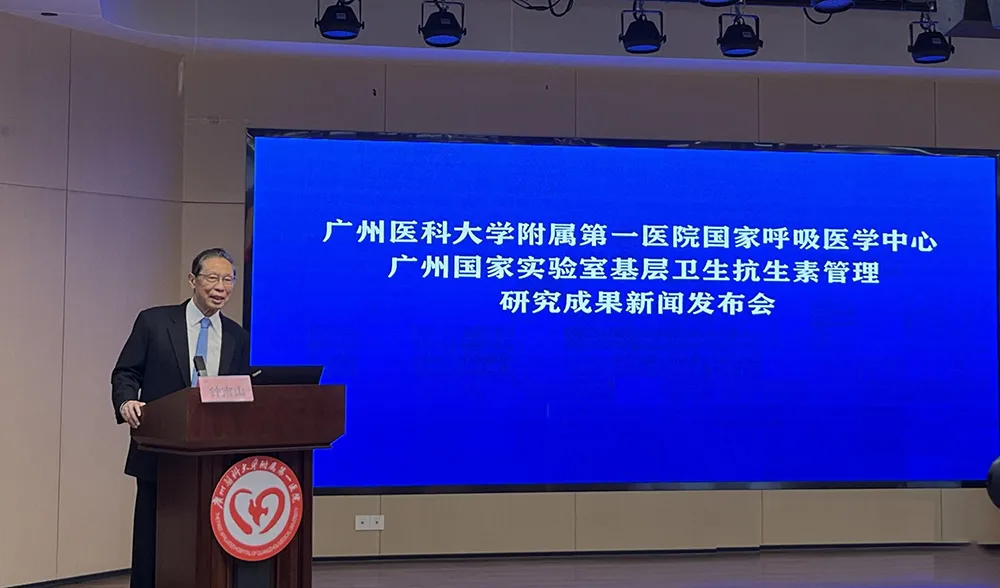
Not one thing but five, aimed at clinicians and patients simultaneously. Doctors received structured training and a short evidence-based guideline. The electronic medical record displayed real-time prompts at the point of prescribing. Prescriptions were peer-reviewed monthly with feedback to each clinician. Patients received education through a smartphone app. Together these formed a "doctor–patient dual-target" package [1][4].
The design choice that matters is the combination. Education alone decays; audit and feedback alone depends on the reviewer; electronic prompts alone are ignored once they become wallpaper. Layering them, and adding a patient-facing component so that patients do not demand antibiotics, is what produced the effect [1][5].
Why the safety result carries as much weight as the effect
Reducing antibiotic use is only acceptable if outcomes do not worsen. The trial reports no increase in hospitalisation and no increase in cost, which addresses the obvious concern that a child with pneumonia might be sent home without treatment [2][5].
Cluster randomisation at the clinic level means contamination between arms is minimised but the effective sample size is 34, not 97,000 — the analysis must account for clustering, and the trial's power rests on that. Both counties are in northern Guangdong with similar health systems; whether the package transfers to provinces with different staffing, EHR systems or antibiotic retail access is untested. Prescribing rate is a process measure: the trial did not demonstrate reduced resistance, which is the outcome that motivates stewardship in the first place [2][4][5].
The condition in context: antimicrobial resistance
AMR is a global public health threat, and primary care prescribing is where the pressure originates.
| Region | What the data shows | Source |
|---|---|---|
| Baseline | Rural township prescribing for acute respiratory infection exceeded 80% [5]. | Heilongjiang industry portal [5] |
| Control drift | Control clinics also fell, to 71%, showing some secular improvement [5]. | Heilongjiang industry portal [5] |
| Policy context | China has regulated antimicrobial prescribing since 2016 but rural implementation lags [3]. | Southern Metropolis Daily [3] |
Because the intervention is software plus training rather than a drug, the cost of scaling it is low relative to its effect [1].
Why it matters
| Potential | What the report suggests | Source |
|---|---|---|
| Effect size | A 57-point absolute reduction in prescribing [2][3]. | [2][3] |
| Safety | No rise in hospitalisation or cost [2][5]. | [2][5] |
| Caution | Process measure; no resistance endpoint [4]. | [4] |
Availability and limits
- This is an editorial summary of the publication, not a clinical recommendation [1][2].
- Results come from two counties in one province [4].
- The package requires an electronic medical record with prescribing prompts [1].
- Effect on resistance and on clinical outcomes beyond hospitalisation is unmeasured [4].
- Sustained effect after the trial ends is unknown [5].
What to ask before booking
| Question | Why it matters |
|---|---|
| Is an antibiotic actually indicated for this infection? | Most acute respiratory infections are viral [3]. |
| What safety-netting advice comes with a no-antibiotic decision? | It is what makes deprescribing safe [2]. |
| Which department handles foreign patients, and in what language? | The hospital is a working hospital we do not book; confirm international-department coordination and language support. |
| Does this clinic use prescribing prompts and audit feedback? | They are the active ingredients of the programme [1]. |
Questions patients ask
What was tested?
A digital antimicrobial stewardship package — clinician training, a brief guideline, EHR prescribing prompts, monthly peer review and patient education — in 34 rural township health centres [1][4].
What was the effect?
Antibiotic prescribing for acute respiratory infections fell from 83% to 26%, against 71% in control clinics [2][3].
Was it safe?
No increase in hospitalisation risk or medical costs was observed [2][5].
Where was it published?
Nature Medicine, online 28 February 2026 [1][2].
Is this relevant to international patients?
It is useful context for China's primary care. The hospital is a working hospital we do not book — contact its international department directly [1].