
Quick answer
Multiport robotic prostatectomy is standard, but it leaves five or six small scars across the abdomen and requires instruments to be crossed from different directions. A single-incision approach reduces the scars but is technically harder and usually needs purpose-built ports. Wang Dong's robotic surgery centre at Sichuan Provincial People's Hospital developed a modified single-incision extraperitoneal technique (pf-ssRARP) that uses no special ports, and has now reported 613 cases performed over four years, with a mean operative time of 74.4 minutes and no conversions to open surgery [1][2].
Key takeaways
- 613 patients operated between November 2020 and November 2024 [1].
- All procedures used da Vinci Si or Xi systems through a single extraperitoneal incision, without dedicated single-port devices [1].
- Mean operative time 74.4 ± 19.6 minutes; no conversion to open surgery [1].
- Published in the Journal of Clinical Urology (China), 2026;41(5):359-363,369 [1][2].
- The team describes the technique as an international first, developed in 2020, with preservation of erectile function as a design goal [3][5].
What is different about it
Standard robotic prostatectomy places ports across the lower abdomen and, in the extraperitoneal route, works in the space between the abdominal wall and the peritoneum. Single-incision surgery puts everything through one opening, which crowds the instruments and the camera. Commercial single-port systems solve the crowding with articulated instruments and a bespoke multichannel port — at a cost, and with limited availability in China [1][5].
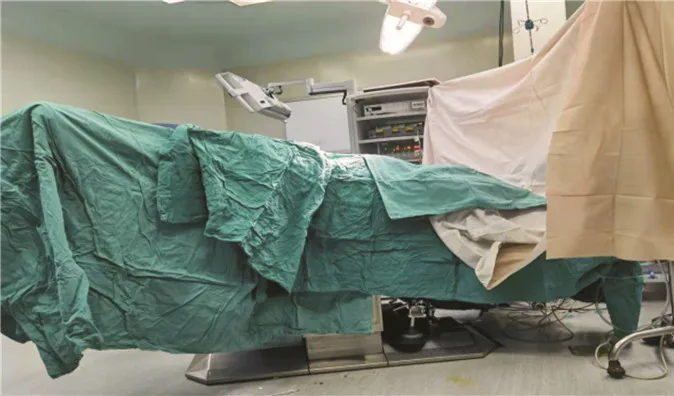
The Sichuan modification avoids the dedicated port by reconfiguring standard trocars and instrument angles within the single incision, and by staying extraperitoneal so that the working space is bounded and predictable. The trade-off is a longer learning curve: the technique is unforgiving of poor port placement [1][4].
What the series shows
The report covers perioperative, pathological and early functional outcomes across 613 consecutive cases — a volume that distinguishes it from most single-incision reports, which typically describe a few dozen patients. Operative time averaged 74.4 minutes with no conversions, which suggests the technique is reproducible in trained hands [1][2].
This is a single-centre retrospective analysis, not a randomised comparison against multiport surgery. Surgeon selection and case selection both favour good results, and functional outcomes such as continence and potency depend on baseline function in ways a case series cannot fully control. The team has published a separate prospective non-randomised comparison of single- versus multi-incision approaches, which adds context but is still not randomised [1][4].
The condition in context: prostate cancer
Prostate cancer is among the commonest male cancers, and surgery is curative for localised disease.
| Region | What the data shows | Source |
|---|---|---|
| Technique | Robotic radical prostatectomy is the dominant surgical approach in Chinese centres [3]. | Provincial research society [3] |
| Functional goals | Continence and erectile function matter as much as cancer control to patients [3][5]. | Provincial research society [3] |
| Platform | The technique has also been demonstrated with a domestic robot, completing in about 40 minutes [3]. | Provincial research society [3] |
Because most localised prostate cancers are slow-growing, the trade-off between cancer control and functional recovery is central to the choice of operation [3].
Why it matters
| For the patient | What the report suggests | Source |
|---|---|---|
| Scarring | A single incision rather than five or six ports [1]. | [1] |
| Cost | No dedicated single-port device is required [1]. | [1] |
| Caution | Retrospective; surgeon-dependent technique [2]. | [2] |
Availability and limits
- This is an editorial summary of a published case series, not a treatment recommendation [1][2].
- Single-centre, retrospective, without randomisation [1].
- Functional outcomes depend heavily on baseline function and nerve-sparing [3].
- The technique demands specific training; not every surgeon can adopt it safely [4].
- Long-term oncological outcomes are not reported in this paper [2].
What to ask before booking
| Question | Why it matters |
|---|---|
| Is my cancer stage suitable for a single-incision approach? | Advanced or bulky disease may need wider access [1]. |
| How many of these has my surgeon performed? | Single-incision surgery has a steep learning curve [4]. |
| Which department handles foreign patients, and in what language? | The hospital is a working hospital we do not book; confirm international-department coordination and language support. |
| What continence and potency outcomes should I expect? | They depend on age, baseline function and nerve sparing [3]. |
Questions patients ask
What was reported?
613 modified single-incision extraperitoneal robotic radical prostatectomies performed between November 2020 and November 2024, with a mean operative time of 74.4 minutes and no conversions [1].
What is modified about it?
It uses standard robotic trocars through one extraperitoneal incision instead of a dedicated single-port device [1].
Where was it published?
The Journal of Clinical Urology (China), 2026;41(5):359-363,369 [1][2].
Is it better than multiport surgery?
Not established — the series is retrospective, though the team has also published a prospective non-randomised comparison [1][4].
Is this relevant to international patients?
It is useful context for China's robotic urology. The hospital is a working hospital we do not book — contact its international department directly [1].