
Quick answer
Body mass index is the measure most health check-ups report, but it cannot distinguish a muscular person from a centrally obese one, and it says nothing about where fat sits. A team at Sichuan Provincial People's Hospital's health management centre compared four obesity indices against a hard outcome — new-onset chronic kidney disease — in 7,584 adults followed through 2015 to 2024. Of these, 558 (7.36%) developed CKD. Waist-to-height ratio, the body shape index and the visceral adiposity index each showed a linear dose-response relationship with risk [1][2][3].
Key takeaways
- Cohort: 7,584 adults with at least three annual check-ups at one health management centre, 2015–2024 [2].
- Outcome: 558 incident CKD cases, 7.36% of the cohort [4].
- Four indices compared: BMI, waist-to-height ratio, a body shape index (ABSI), visceral adiposity index (VAI) [1].
- WHtR, ABSI and VAI showed linear dose-response relationships on restricted cubic spline analysis [4].
- Authors include Liu Yuping and Shuai Ping of the health management centre [1][4].
Why the choice of index matters
All four indices are calculated from data a routine check-up already collects — weight, height, waist circumference, triglycerides, HDL cholesterol. The question is which one carries the most prognostic information per measurement, because a screening tool that requires only a tape measure can be deployed anywhere [1][4].
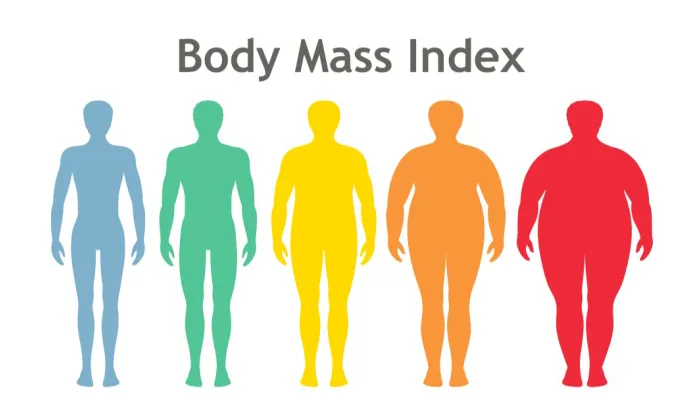
Waist-to-height ratio has an intuitive appeal for screening: it needs one threshold that applies across heights, and it captures central adiposity, which is the fat depot most closely tied to insulin resistance and glomerular hyperfiltration. ABSI adjusts waist for BMI and height, and VAI combines waist with lipid measures to estimate visceral fat [1][2].
What a check-up cohort can and cannot show
The strength of this design is the repeated measurement: people who return for three or more annual examinations generate genuine longitudinal data, and the outcome is a laboratory diagnosis rather than self-report. That is unusual in Chinese obesity research, which often relies on cross-sectional surveys [2][4].
People who attend annual check-ups for a decade are healthier and wealthier than the general population, so the 7.36% incidence is likely an underestimate of the population rate. The cohort is single-centre and drawn from one province. And a statistically significant hazard ratio does not mean the index is a good clinical test: the study reports ROC analysis, but discrimination for a multifactorial outcome like CKD is typically modest for any single anthropometric measure. The practical claim should be that these indices are worth reporting alongside BMI, not that one of them replaces kidney function testing [1][3].
The condition in context: chronic kidney disease
CKD is common, silent until late, and expensive to treat at the dialysis stage.
| Region | What the data shows | Source |
|---|---|---|
| Detection | CKD has high prevalence but low awareness and high mortality [5]. | Clinical Kidney Journal [5] |
| Screening gap | China has no mature national screening system comparable to those in developed countries [5]. | Clinical Kidney Journal [5] |
| Obesity link | Weight and weight gain are associated with new albuminuria in check-up populations [6]. | Chinese Journal of Nephrology [6] |
Because albuminuria and eGFR are cheap, the value of an obesity index is in deciding who gets tested more often, not in replacing the test [5].
Why it matters
| For the patient | What the report suggests | Source |
|---|---|---|
| No new equipment | A tape measure and a lipid panel suffice [1]. | [1] |
| Earlier flagging | Central adiposity marks risk before eGFR falls [4]. | [4] |
| Caution | Healthy-volunteer cohort; modest discrimination [2][3]. | [2][3] |
Availability and limits
- This is an editorial summary of the publication, not a screening recommendation [1][2].
- Single-centre cohort of health check-up attendees, not the general population [2].
- It reports association and predictive value, not that screening by index prevents CKD [4].
- Cut-offs derived in this cohort may not transfer to other populations [1].
- Albuminuria and eGFR remain the diagnostic tests [5].
What to ask before booking
| Question | Why it matters |
|---|---|
| Does my check-up report waist-to-height ratio, or only BMI? | Central adiposity carries the prognostic signal [1]. |
| Has my urine albumin-to-creatinine ratio been measured? | It detects CKD before eGFR falls [5]. |
| Which department handles foreign patients, and in what language? | The hospital is a working hospital we do not book; confirm international-department coordination and language support. |
| How often should I repeat kidney screening? | Frequency should follow risk, not habit [4]. |
Questions patients ask
What was studied?
Four obesity indices — BMI, waist-to-height ratio, a body shape index and visceral adiposity index — and their association with new-onset chronic kidney disease in 7,584 adults with repeated annual check-ups [1][2].
What was found?
558 participants (7.36%) developed CKD; waist-to-height ratio, ABSI and VAI showed linear dose-response relationships with risk [4].
Where was it published?
The Journal of Health Examination and Management (China), 2026 [1][2].
Should I use waist-to-height ratio instead of BMI?
It adds information rather than replacing BMI, and it does not replace kidney function testing [3][5].
Is this relevant to international patients?
It is useful context for China's preventive health check-up system. The hospital is a working hospital we do not book — contact its international department directly [1].