
Quick answer
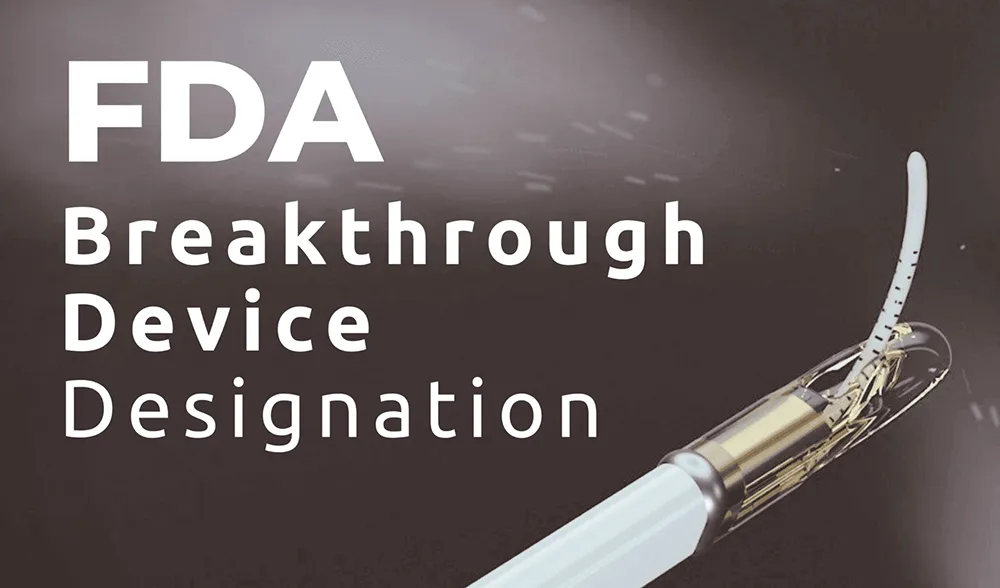
Thyroid eye disease (TED) pushes the eyes forward, retracts the lids and can threaten sight, but its severity has long been judged by eye and measured with a Hertel exophthalmometer designed in 1905. Ruijin Hospital's endocrinology team, led by Wang Weiqing under the broader programme of Ning Guang, built an automatic ocular-sign measurement device — the Ocular Signometer — that quantifies those signs by imaging. It won US FDA Breakthrough Device Designation, after entering China's innovative-device fast track in 2024 [1][2].
Key takeaways
- The device automatically measures and quantifies ocular signs of TED, replacing manual caliper measurement [1][2].
- It received US FDA Breakthrough Device Designation, described as the first such designation in the TED field globally as of 31 December 2025 [1][3].
- It entered China's innovative medical device special review channel in 2024 — the "dual China-US innovation channel" [1].
- Development took seven years and five hardware/software iterations [1][4].
- It is approved and marketed in China and included in medical insurance reimbursement [5].
The clinical problem
TED is the most common orbital disease in adults. It affects 25–40% of patients with Graves' hyperthyroidism and about 2% of those with Hashimoto thyroiditis; in 40% it follows the thyroid disease, in 40% it appears together, and in 20% the eye signs come first, usually within two years [6].
The disease follows the Rundle curve: an active inflammatory phase lasting months to two years, then an inactive fibrotic phase. Timing treatment — immunosuppression in the active phase, surgery later — depends on knowing which phase a patient is in, and that judgement has been subjective. Chinese data show a median active phase of only nine months, with 75.5% of patients inactive within 12 months, so the window is narrow and varies widely between patients [6].
What the device changes
Manual exophthalmometry depends on the observer, the instrument's placement and the patient's anatomy; measurements vary between visits and between doctors. A device that images the eye and computes proptosis, lid retraction, motility and other signs numerically allows clinicians to track change over time — which is exactly what deciding when to treat requires [1][6].
FDA Breakthrough Device Designation accelerates review for devices that may offer significant advantages over existing options; it is not an approval and does not itself demonstrate improved outcomes. The device is approved in China and reimbursed, and its clinical research appeared in the Chinese Journal of Endocrinology and Metabolism in September 2026, but independent multicentre outcome studies are still needed [1][5][6].
The condition in context: thyroid eye disease
TED is disfiguring and sometimes blinding, and its treatment hinges on accurate staging.
| Region | What the data shows | Source |
|---|---|---|
| Prevalence | 25–40% of Graves' hyperthyroidism patients develop TED; about 2% of Hashimoto patients do [6]. | Chinese Journal of Endocrinology and Metabolism [6] |
| Timing | 40% after, 40% with, 20% before thyroid disease; 80% within two years [6]. | Chinese Journal of Endocrinology and Metabolism [6] |
| China | Median active phase nine months; 75.5% inactive within 12 months — narrower than Western data [6]. | Chinese Journal of Endocrinology and Metabolism [6] |
Because the active window is short and treatment decisions are time-sensitive, a reliable quantitative measure has direct clinical value [6].
Why it matters
| Potential | What the report suggests | Source |
|---|---|---|
| Objectivity | Numeric measurement replaces observer-dependent calipers [1][2]. | [1][2] |
| Tracking | Serial measurements help time immunosuppression versus surgery [6]. | [6] |
| Caution | Breakthrough designation is not approval or proof of benefit [3]. | [3] |
Availability and limits
- This is an editorial summary of hospital and media reports, not a booking channel [1][2].
- FDA Breakthrough Device Designation does not mean the device is approved in the US [3].
- It is approved and reimbursed in China; availability elsewhere varies [5].
- It measures signs; it does not by itself determine treatment [6].
- Independent outcome studies are still needed [1].
What to ask before booking
| Question | Why it matters |
|---|---|
| Is my TED active or inactive, and how is that judged? | Treatment differs by phase [6]. |
| Will serial measurements be taken with the same device? | Comparability over time is the point of quantification [1]. |
| Which department handles foreign patients, and in what language? | Ruijin is a working hospital we do not book; confirm international-department coordination and language support. |
| What treatment options follow the assessment? | Measurement informs, but does not replace, a treatment plan [6]. |
Questions patients ask
What is the Ocular Signometer?
An automatic device that images and quantifies the ocular signs of thyroid eye disease — proptosis, lid retraction and related measures — replacing manual caliper assessment [1][2].
What did the FDA designation mean?
It granted Breakthrough Device Designation, an accelerated-review pathway for devices that may offer significant advantages; it is not an approval [1][3].
Is it available in China?
Yes — it is approved and marketed in China and included in medical insurance reimbursement [5].
Why does quantification matter?
The active phase is short and variable, and treatment timing depends on detecting change reliably [6].
Is this relevant to international patients?
It is useful context for China's device innovation. Ruijin is a working hospital we do not book — contact its international department directly [1].