
Quick answer
China's dental materials have long been imported. A 20-year programme led by Deng Xuliang at Peking University School of Stomatology — with Beihang University, Huazhong University of Science and Technology, Beijing University of Chemical Technology and industry partners — produced a family of dental and jaw restorative materials and the clinical techniques to use them. The project won a 2025 National Science and Technology Progress Award, second prize, announced on 8 July 2026 — one of five Beijing medical achievements recognised that year [1][2][3][5].
Key takeaways
- The award covers "dental and jaw restorative new materials and their clinical technology system" [1].
- It targets three problems: toothache relief, fillings that fail, and insufficient bone for implants [2].
- Outputs include multi-scale materials that replicate natural tooth structure, a cationic flow-blocking agent for pain, and a microenvironment-remodelling bone-regeneration strategy [1][2].
- Results were published in Nature, Science and Nature Materials and twice listed among China's important medical advances [4].
- Translated products — dental membranes and bone-graft materials — have been used in more than one million clinical cases [4].
The three problems
Chinese dentistry's material problems are unglamorous and universal: pulpitis pain that is hard to stop without extracting the tooth; composite fillings that debond and need replacing every few years; and jawbone that has resorbed too far to hold an implant without grafting [2].
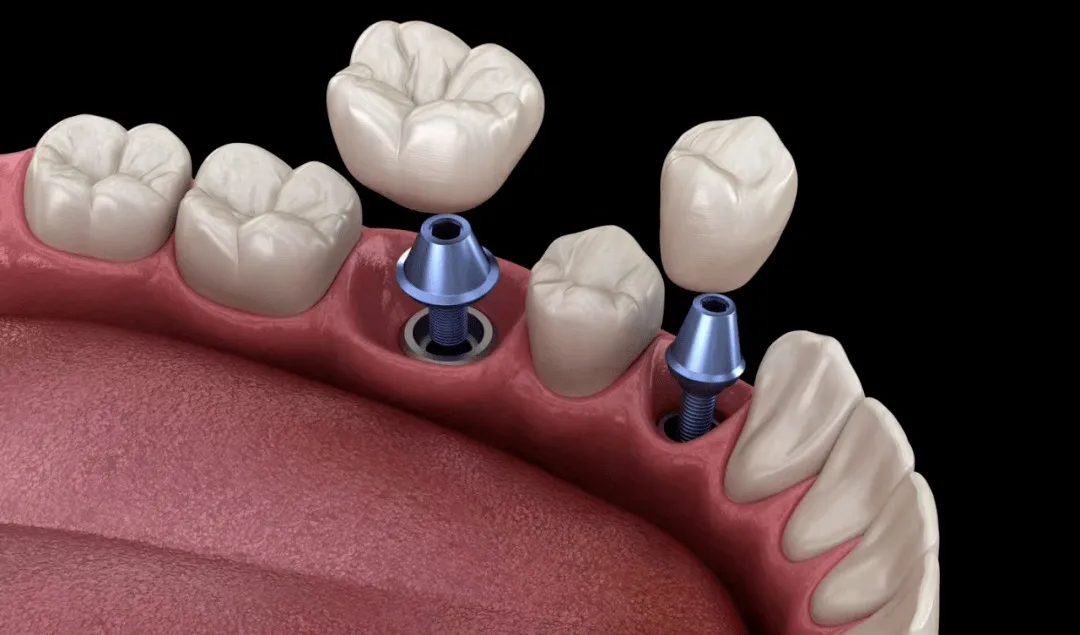
The team's answers were materials-led. Multi-scale structures mimic enamel and dentine so restorations bond and wear like the original tissue. A cationic flow-migration blockade interrupts the pulpal inflammatory cascade to relieve pain while preserving the tooth. And a microenvironment-remodelling strategy changes the local biology so that bone regenerates into a graft rather than being walled off by fibrous tissue [1][2].
From bench to a million cases
The project's industrial partners — Shandong Hugedent, Imeik and Shenzhen Landu Biomaterials — turned the laboratory work into approved products. Landu's dental membrane and bone-filling materials completed clinical trials with the academic team and have been applied in more than a million cases, with performance reported as better than imported equivalents [4].
National awards recognise a body of work and its translation, not a single controlled study. The individual products have their own regulatory dossiers and clinical evidence, but this article does not report comparative outcome data for them. "Better than imported" is the project's own claim, made in Chinese industry coverage [4].
The condition in context: oral disease in China
Oral disease is one of China's most common chronic conditions, and material performance drives both outcomes and cost.
| Region | What the data shows | Source |
|---|---|---|
| China | Oral disease is described as a major chronic disease burden; caries and tooth loss remain widespread [1]. | PKU award announcement [1] |
| Cost | High-end restorative materials were long dominated by foreign brands, keeping prices high [2]. | China.com [2] |
| Access | Domestic materials aim to lower cost while matching performance [4]. | Shenzhen News [4] |
Because the same materials are used in millions of restorations and implants each year, marginal improvements in durability or bone integration have large aggregate effects [2].
Why it matters
| Potential | What the report suggests | Source |
|---|---|---|
| Durability | Materials designed to mimic natural tooth structure may reduce replacement [1]. | [1] |
| Cost | Domestic products compete with imported brands [2][4]. | [2][4] |
| Caution | Awards are not comparative trials; product-level evidence varies [4]. | [4] |
Availability and limits
- This is an editorial summary of award announcements and industry coverage, not a product recommendation [1][2].
- The award recognises a programme, not a single device's trial results [1].
- Individual product performance depends on indication and operator [4].
- "Better than imported" is a claim from project coverage, not an independent meta-analysis [4].
- Availability and reimbursement vary by product and region [5].
What to ask before booking
| Question | Why it matters |
|---|---|
| Which material will be used, and what is its evidence base? | Programme-level awards do not guarantee a specific product's performance [4]. |
| Is bone grafting needed, and with which material? | Bone regeneration strategy affects implant feasibility [2]. |
| Which department handles foreign patients, and in what language? | PKU Stomatology is a working hospital we do not book; confirm international-department coordination and language support. |
| What is the expected longevity and replacement cost? | Durability is the clinical and economic question [1]. |
Questions patients ask
What did the project win?
A 2025 National Science and Technology Progress Award, second prize, for dental and jaw restorative new materials and their clinical technology system, announced on 8 July 2026 [1][5].
Who led it?
Deng Xuliang of Peking University School of Stomatology, with Beihang University, Huazhong University of Science and Technology, Beijing University of Chemical Technology and industry partners [1].
What problems does it address?
Toothache relief, fillings that repeatedly fail, and insufficient jawbone for implants [2].
Are the products in use?
Yes — dental membranes and bone-graft materials have been used in more than one million clinical cases [4].
Is this relevant to international patients?
It is useful context for China's dental materials. PKU Stomatology is a working hospital we do not book — contact its international department directly [1].