
Quick answer
Peking University's hospital of stomatology now runs dental digital-intelligence centres that bring scanning, design and treatment into one digital workflow. They stock intraoral and facial scanners, a mandibular-motion tracker and an implant robot, and combine chairside CAD/CAM with robotic assistance and AI [1]. The underlying research comes from a national engineering laboratory that developed the world's first robotic automatic tooth-preparation system [2].
Key takeaways
- The First Clinic's digital-intelligence centre gathers implantology, prosthodontics, oral surgery, periodontics and endodontics specialists in one platform [1].
- Equipment includes intraoral scanners, an implant robot, facial scanners and a mandibular-motion tracker [1].
- Workflow runs from diagnosis and design to treatment, with chairside CAD/CAM, robotics and AI as core technologies [1].
- The national engineering laboratory produced the world's first robotic automatic tooth-preparation system, licensed internationally in 2018 [2].
- In August 2026 the hospital hosted a national dental device innovation conference with dedicated digital-implantology sessions [3].
What the centres do
The hospital's First Clinic opened a "dental digital-intelligence diagnosis and treatment centre" as a single platform for digital dentistry. Rather than sending a patient between departments, it assembles implant, prosthetic, surgical, periodontal and endodontic expertise around one digital record, and books the whole pathway as a one-stop appointment at standard hospital prices [1].
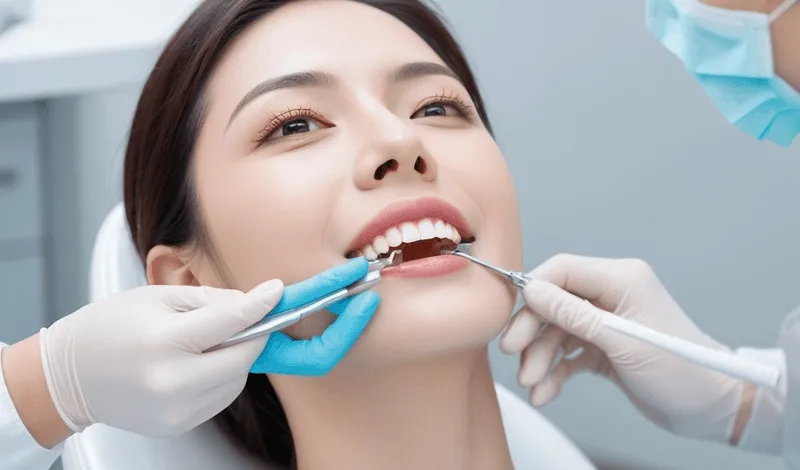
The equipment list is the giveaway: intraoral scanners capture the arch in minutes, facial scanners and a mandibular-motion tracker record how the bite actually moves, and the implant robot executes a plan that was designed on the scanned data. Chairside CAD/CAM then mills or prints the restoration in the same visit [1].
From research to clinic
The clinical platform rests on years of engineering work at the national engineering laboratory for dental digital medical technology and materials. Its best-known output is a robotic automatic tooth-preparation system — computer control, a three-degree-of-freedom hand-like robot, a tooth locator, a follow-the-motion light guide and a femtosecond laser — which plans and executes cuts that a clinician would otherwise make by hand [2].
The laboratory licensed that patent to an Israeli robotics company in 2018 for 20 years of exclusive global commercialisation, an unusually direct route from a Chinese dental lab to an international product [2].
The condition in context: dental implants
Implant placement is a precision task: the angle, depth and position of a titanium root determine whether the crown fits, whether the bone holds, and whether nerves or sinuses are avoided.
| Region | What the data shows | Source |
|---|---|---|
| China | The digital dental-implant market is forecast to grow faster than 20% a year and to exceed 10 billion yuan by 2026 [5]. | China Stomatology Network [5] |
| Technique | Digital guides and navigation reduce positional error and suit complex or multiple missing teeth [1]. | PKU digital centre [1] |
| Robotics | Robotic arms execute planned implant positions with high repeatability [1][2]. | PKU / engineering lab [1][2] |
Precision matters most in the cases that are hardest to treat — severe bone defects, fully edentulous jaws and patients needing immediate loading [1].
Why it matters
| For the patient | What the profile suggests | Source |
|---|---|---|
| Fewer visits | Scanning, design and milling can happen in one appointment [1]. | [1] |
| Accuracy | Guides and robotics reduce deviation from the planned position [1][2]. | [1][2] |
| Caution | Technology does not replace diagnosis; bone quality and medical history still decide candidacy [1]. | [1] |
Availability and limits
- This is an editorial profile of hospital and conference material, not a booking channel [1][3].
- Not every case needs or benefits from robotic placement; conventional guided surgery remains standard for many patients [1].
- Equipment availability differs between campuses and clinics [1].
- Costs vary by implant system, bone grafting and restoration and are not listed here [1].
- Market forecasts describe the industry, not this hospital's outcomes [5].
What to ask before booking
| Question | Why it matters |
|---|---|
| Is robotic or guided placement appropriate for my case? | Indication depends on bone, bite and medical history [1]. |
| Will the whole workflow be digital? | The centre's advantage is a single digital chain from scan to crown [1]. |
| Which department handles foreign patients, and in what language? | PKU Stomatology is a working hospital we do not book; confirm international-department coordination and language support. |
| What is the total cost and timeline? | Implant, bone graft and restoration are priced separately [1]. |
Questions patients ask
Does PKU Stomatology use robots for implants?
Yes — its digital-intelligence centres are equipped with an implant robot alongside scanners and chairside CAD/CAM, with robotics, digital design and AI as core technologies [1].
What is the robotic tooth-preparation system?
A world-first system developed at the national engineering laboratory that plans and executes tooth preparation automatically, licensed internationally in 2018 [2].
Does every implant patient get robotic surgery?
No. Guided surgery remains appropriate for many cases; robotics is used where precision or complexity warrants it [1].
What was the August 2026 conference?
The second Beijing dental medical-device innovation and translation conference, hosted by the hospital, with dedicated sessions on digital-intelligent implantology [3].
Is this relevant to international patients?
It is useful context for China's digital dentistry. PKU Stomatology is a working hospital we do not book — contact its international department directly for appointments and language support [1].