
Quick answer
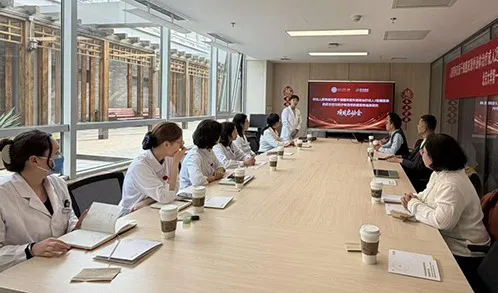
Type 2 diabetes is treated by lowering glucose, but the drugs available do not stop β-cell function from declining. Exosomes — nanoscale vesicles that cells release to carry proteins, lipids and RNA — are being tested as a "cell-free" alternative to stem cell therapy: they carry the repair signals without putting living cells into the body. On 16 April 2026, Peking University First Hospital's endocrinology department launched HOPE-T2DM, described as China's first clinical study of exosome infusion for type 2 diabetes [1][2][4].
Key takeaways
- Full title: safety and preliminary efficacy of human umbilical cord mesenchymal stem cell-derived exosomes in adults with type 2 diabetes [1].
- Investigator-initiated trial (IIT) led by the endocrinology department, with Beijing ECHO Biotech as partner [1][2].
- Principal investigator Gao Ying; executive lead Zhang Yang; Gu Nan on the study team [1][2].
- Registered on ClinicalTrials.gov as NCT07693036, recruiting at the Beijing site [3].
- Two phases: a safety study, then an exploratory efficacy study [2].
Why exosomes instead of cells
Mesenchymal stem cells have been studied in diabetes for years, but infusing living cells raises three problems: immune rejection, microvascular embolism and — for engineered cells — long-term oncological uncertainty. Exosomes avoid all three because nothing living is transplanted; the vesicles are cleared like any other nanoparticle [1][2].
The biological claim is that exosomes from umbilical cord mesenchymal stem cells carry anti-inflammatory and tissue-repair signals that improve insulin sensitivity in peripheral tissues, protect β-cells and reduce chronic inflammation — the three processes that drive type 2 diabetes. Whether that survives the trip through intravenous infusion, lung passage and hepatic clearance is the central scientific question [1][2].
What has been reported so far
At the launch, the team described a two-stage design: a dose-escalating safety phase, followed by exploratory efficacy. A Beijing Television report later described the first low-dose cohort (1×10¹¹ vesicles) and one patient whose glucose and liver indices improved after two doses — a single observation, presented in a television feature rather than a publication [2][4].
Individual patient anecdotes on television are not evidence of efficacy, and no outcome data have been published. Exosome products are also difficult to characterise: what a preparation contains depends on the donor cells, the culture conditions and the purification method, which is why regulators now treat them as advanced therapy medicinal products requiring defined manufacture [5].
The condition in context: type 2 diabetes
China has the largest diabetes population in the world, and current therapy does not reverse β-cell decline.
| Region | What the data shows | Source |
|---|---|---|
| Treatment limits | Existing drugs control glucose but do not stop progressive β-cell failure, requiring lifelong therapy [2]. | PEDaily [2] |
| Regulation | Exosomes were placed under China's advanced therapy medicinal product framework in 2025 [5]. | ACROBiosystems review [5] |
| Global status | No exosome drug is approved anywhere yet, though several are in late-stage trials for other diseases [5]. | ACROBiosystems review [5] |
Because weight loss of 5–15% can put type 2 diabetes into remission, any new therapy competes with a lifestyle intervention that already works — a point worth keeping in view [3].
Why it matters
| Potential | What the report suggests | Source |
|---|---|---|
| Safety profile | No living cells, so no rejection or embolism risk [2]. | [2] |
| Mechanism | Multi-target repair rather than glucose lowering alone [1]. | [1] |
| Caution | No efficacy data; product characterisation is hard [5]. | [5] |
Availability and limits
- This is an editorial summary of launch and media reports, not a treatment offer [1][2].
- The study is an IIT; exosomes are not an approved diabetes treatment [5].
- Only safety data from a low-dose cohort have been described publicly [4].
- Eligibility requires adult type 2 diabetes and protocol criteria [3].
- Fertility, pregnancy and cancer history are typically exclusions for cell-derived products [3].
What to ask before booking
| Question | Why it matters |
|---|---|
| Is the trial enrolling, and at which dose level? | Dose escalation determines risk [2]. |
| How is the exosome product characterised and released? | Product consistency is the field's main technical problem [5]. |
| Which department handles foreign patients, and in what language? | The hospital is a working hospital we do not book; confirm international-department coordination and language support. |
| What standard therapy will continue alongside? | The study is adjunctive, not a replacement [1]. |
Questions patients ask
What is HOPE-T2DM?
An investigator-initiated clinical study at Peking University First Hospital testing intravenous exosomes from human umbilical cord mesenchymal stem cells in adults with type 2 diabetes, launched 16 April 2026 [1][2].
Is it China's first?
It is described as the first domestic IIT of exosome injection for type 2 diabetes [2][4].
Why exosomes rather than stem cells?
No living cells are infused, so there is no immune rejection or microvascular embolism risk; the vesicles still carry repair signals [1][2].
Has it been shown to work?
No — only a low-dose safety phase and individual observations have been described, with no published efficacy data [4].
Is this relevant to international patients?
It is useful context for China's cell-free therapy research. The hospital is a working hospital we do not book — contact its international department directly [1].