
Quick answer
Fuzheng-Zhiai ("strengthen the upright, treat the cancer") is the academic tradition of national TCM master Liu Jiaxiang, practised at Longhua Hospital. Liu Lingshuang's team reports a prospective randomised controlled trial showing that TCM-led integrated treatment, compared with adjuvant chemotherapy, significantly prolonged disease-free survival in patients after surgery for stage Ib–IIIa non-small-cell lung cancer and reduced the risk of recurrence or metastasis by 27% [1].
Key takeaways
- The finding comes from a prospective randomised controlled trial, not a retrospective series [1].
- Population: stage Ib–IIIa NSCLC after surgery [1].
- Comparator: adjuvant chemotherapy; the TCM arm received integrated TCM-led treatment [1].
- Outcome: significantly longer disease-free survival and a 27% lower recurrence/metastasis risk [1].
- Mechanism work points to immune killing and reversal of immune escape [1].
What was studied
Longhua's oncology department has built its lung-cancer programme around Liu Jiaxiang's "Fuzheng-Zhiai" framework, which shifts the focus from attacking the tumour to supporting the patient's own defences alongside disease-directed therapy. Liu Lingshuang, who has worked in the field for 37 years, led a series of studies to test that idea with modern trial methods [1][3].
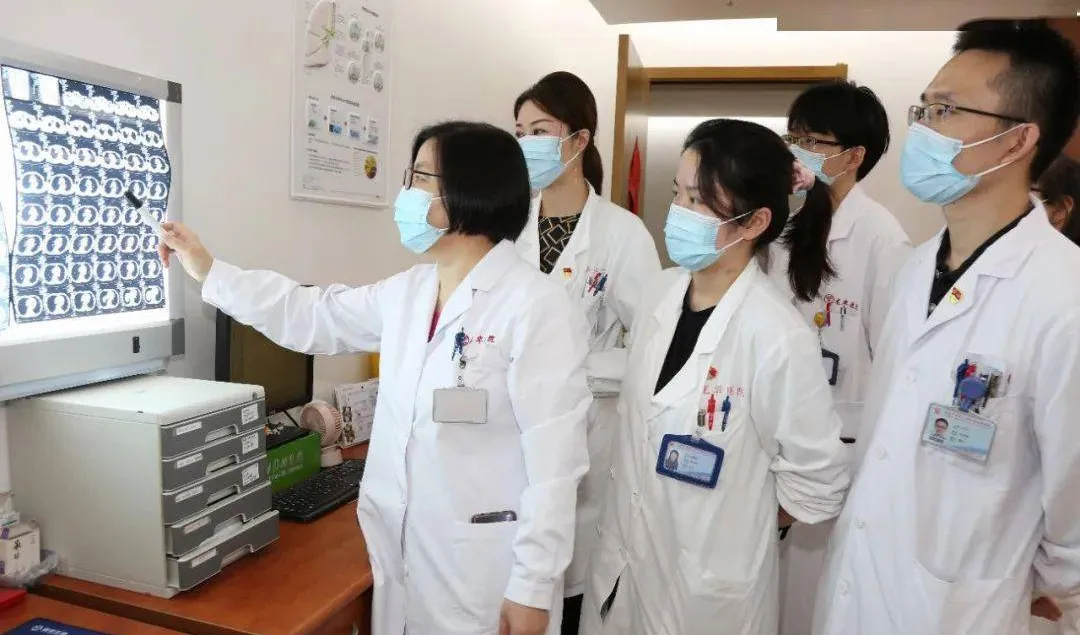
The prospective randomised trial compared TCM-led integrated treatment with adjuvant chemotherapy in stage Ib–IIIa patients after resection, with disease-free survival as the key endpoint. The team reports a statistically significant DFS benefit and a 27% reduction in recurrence or metastasis risk [1].
Supporting and related evidence
A separate, larger retrospective cohort from the same group illustrates the direction of effect: in 700 stage IIIA patients treated between 2016 and 2022, those receiving Fuzheng-based TCM had a median DFS of 32.0 versus 17.0 months and a 42% lower recurrence/metastasis risk (HR 0.58), published in Chinese Medicine in 2025 [2][4].
The 27% figure comes from the prospective randomised trial; the 42% figure comes from the retrospective cohort. They are not the same study and should not be pooled. Randomisation strengthens the 27% finding, but the trial's size, blinding and full publication details are not clear from the award announcement, and TCM trials face well-known challenges in blinding and placebo design [1][2].
The condition in context: lung cancer after surgery
Lung cancer is China's leading cause of cancer death, and even resected early-stage disease frequently recurs.
| Region | What the data shows | Source |
|---|---|---|
| China | Lung cancer has the highest incidence and mortality of any cancer in China [4]. | Longhua / Chinese Medicine [4] |
| Stage IIIA | Post-operative recurrence risk is high despite adjuvant chemo-radiotherapy [2]. | Chinese Medicine cohort [2] |
| TCM use | Fuzheng treatment is widely used as an adjunct during and after chemotherapy in China [3][5]. | Shanghai Observer [3] |
Because adjuvant chemotherapy adds only a few percentage points of survival, any adjunct that safely improves DFS would be clinically meaningful — which is why randomised evidence matters here [2].
Why it matters
| Potential | What the report suggests | Source |
|---|---|---|
| Relapse | 27% lower recurrence/metastasis risk in a randomised trial [1]. | [1] |
| Integration | Adds an evidence-based option alongside chemotherapy [1][3]. | [1][3] |
| Caution | Full trial details, blinding and external replication are needed [1][2]. | [1][2] |
Availability and limits
- This is an editorial summary of hospital award material and a related publication, not a treatment recommendation [1][2].
- The 27% figure is from an institutional award announcement; the full trial paper is not cited here [1].
- The 42% figure is from a retrospective cohort and is not comparable [2].
- Herbal formulae are not standardised across hospitals and may interact with chemotherapy [3].
- TCM should be used alongside, not instead of, standard adjuvant treatment [3].
What to ask before booking
| Question | Why it matters |
|---|---|
| Which formula would I receive, and has it been tested in a trial? | Evidence is formula-specific, not generic to "TCM" [1]. |
| Could it interact with my chemotherapy or targeted therapy? | Herb-drug interactions are a real risk [3]. |
| Which department handles foreign patients, and in what language? | Longhua is a working hospital we do not book; confirm international-department coordination and language support. |
| How will disease-free survival be monitored? | Imaging follow-up remains essential alongside any adjunct [2]. |
Questions patients ask
What is Fuzheng-Zhiai?
A TCM approach meaning 'strengthen the upright, treat the cancer', developed by national master Liu Jiaxiang and practised at Longhua Hospital; it supports the patient's defences alongside disease-directed treatment [3].
What did the randomised trial show?
In stage Ib–IIIa NSCLC after surgery, TCM-led integrated treatment significantly extended disease-free survival versus adjuvant chemotherapy and reduced recurrence/metastasis risk by 27% [1].
Is 27% the same as the 42% figure reported elsewhere?
No — 27% comes from the prospective randomised trial; 42% comes from a separate retrospective cohort of 700 stage IIIA patients [1][2].
Should patients replace chemotherapy with TCM?
No. The evidence supports TCM as an adjunct alongside standard treatment, not a replacement [3].
Is this relevant to international patients?
It is useful context for China's integrative oncology. Longhua is a working hospital we do not book — contact its international department directly [1].