
Quick answer
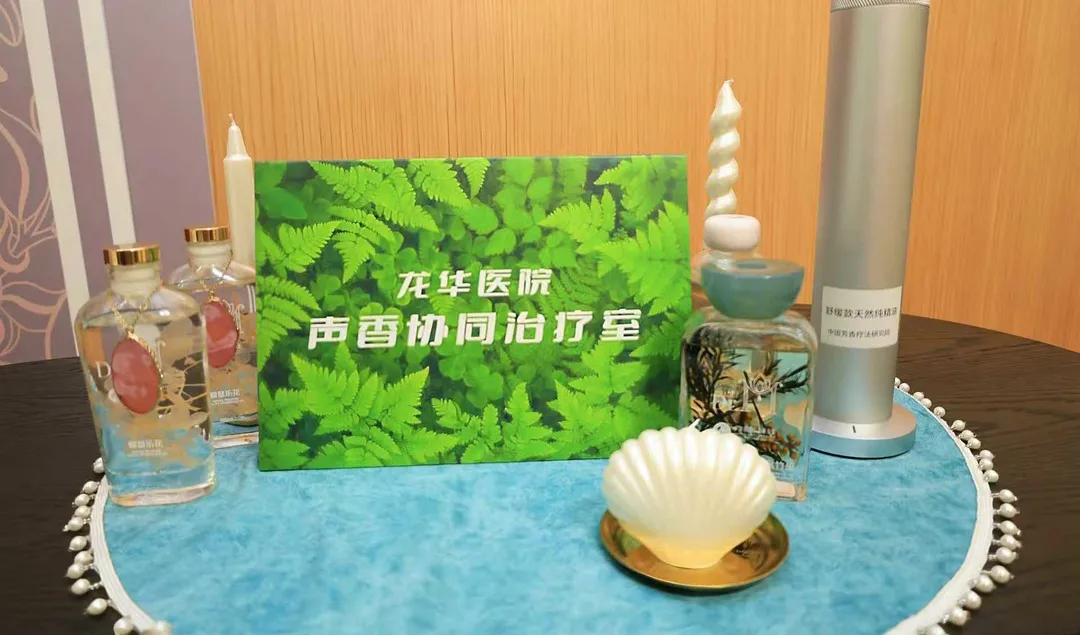
Pancreatic cancer pain is among the hardest to control: it is driven by invasion of the coeliac plexus and retroperitoneal nerves, it escalates quickly, and opioid doses high enough to control it bring sedation, constipation and delirium. Non-drug adjuncts are attractive for exactly that reason. On 10 October 2025, Longhua Hospital and the China Aromatherapy Research Institute announced a multicentre, randomised, placebo-controlled study of medicinal plant-derived essential oils, delivered by topical application and inhalation, as an adjunct in pancreatic cancer pain [1][2][5].
Key takeaways
- Design: multicentre, randomised, placebo-controlled clinical study [2][5].
- Intervention: medicinal plant-derived essential oils, applied topically and inhaled — non-invasive routes [1][3].
- Population: pancreatic cancer pain, one of the most refractory cancer pain syndromes [1].
- Rationale: the hospital's "supporting the upright" anti-cancer framework, with scent as the delivery medium [2].
- Context: extends a June 2025 programme of essential oil adjuncts across five high-burden chronic diseases, starting with insomnia [1][2].
Why a placebo control matters here
Pain is the outcome most vulnerable to expectation, and aromatherapy carries strong expectancy effects from both patients and staff. A placebo-controlled design — with a matched odour-free or inert vehicle — is the minimum for a credible claim, and the announcement specifies one, which is the most important detail in it [2][5].
The clinical logic is adjunctive rather than substitutive: if a well-tolerated intervention reduces opioid requirement by even a modest margin, it reduces sedation and constipation for patients with limited prognosis. That is a realistic and worthwhile target [1][3].
What is not yet known
This is a launched study, not a result. No efficacy data exist, and the announcement does not report sample size, primary endpoint, or the specific oils [1][2].
Blinding is hard: patients can often detect a scent, and the therapist applying oil cannot be blinded. Essential oils are chemically variable between batches, and their constituents are absorbed systemically in small amounts — which raises interaction and tolerability questions in patients on multiple drugs. Pancreatic cancer pain also progresses rapidly, so a short trial may capture only a narrow window. The prior literature on aromatherapy for cancer pain consists largely of small trials with heterogeneous interventions, and meta-analyses report benefit with low certainty [4][5].
The condition in context: pancreatic cancer pain
Most patients present with advanced disease, and pain control is a central determinant of quality of life.
| Region | What the data shows | Source |
|---|---|---|
| Current standard | Analgesic escalation according to the WHO ladder, with coeliac plexus neurolysis in selected cases [1]. | Longhua Hospital [1] |
| Limitation | Opioids bring side effects and tolerance, and dose escalation is limited [3]. | China Economic Net [3] |
| Evidence base | Aromatherapy for cancer pain has been studied, but mostly in small heterogeneous trials [4]. | Evidence summary [4] |
Because the population has a short prognosis, an intervention that improves comfort without adding burden is valuable even if the effect size is modest [1][2].
Why it matters
| Potential | What the report suggests | Source |
|---|---|---|
| Design | Placebo-controlled and multicentre [2][5]. | [2][5] |
| Route | Non-invasive, suitable for frail patients [1]. | [1] |
| Caution | No results yet; blinding is imperfect [4]. | [4] |
Availability and limits
- This is an editorial summary of a study launch, not a treatment recommendation [1][2].
- No efficacy or safety data for this study exist yet [2].
- Essential oil composition varies between products [4].
- Essential oils are not a substitute for analgesic therapy [3].
- Enrolment criteria and endpoint are not yet published [1].
What to ask before booking
| Question | Why it matters |
|---|---|
| Is my pain regimen optimised before adding adjuncts? | Adjuncts presuppose adequate analgesia [3]. |
| Is this available only within the study? | Yes — it is a research protocol [1]. |
| Which department handles foreign patients, and in what language? | Longhua is a working hospital we do not book; confirm international-department coordination and language support. |
| Could the oils interact with my medicines or irritate my skin? | Tolerability in frail patients is the main risk [4]. |
Questions patients ask
What is being studied?
Medicinal plant-derived essential oils, applied topically and inhaled, as an adjunct for pancreatic cancer pain in a multicentre, randomised, placebo-controlled study [1][2].
Are there results?
No — the study was launched in October 2025 and no outcome data are reported [2].
Why pancreatic cancer?
It produces some of the most refractory cancer pain, and opioid escalation is limited by side effects [1][3].
Does aromatherapy work for cancer pain?
Prior trials are small and heterogeneous, with low-certainty evidence — which is why a placebo-controlled study is needed [4].
Is this relevant to international patients?
It is useful context for China's integrative oncology. The hospital is a working hospital we do not book — contact its international department directly [1].