
Quick answer
An anal fistula is a chronic tract between the anal canal and the skin. Cutting it open — fistulotomy — cures it and can also divide the sphincter, which is why high and complex fistulas are genuinely difficult: cut too much and the patient is incontinent, cut too little and it recurs. Lu Jingen at Longhua Hospital, fourth-generation inheritor of the Gu's surgery tradition, developed drag-thread therapy: medicated silk threads are drawn through the tract so that the tissue is gradually corroded and drained while the sphincter muscle is left intact. It is now listed as a national appropriate technology, taught in eight national textbooks, and has won a 2025 Shanghai medical science award for dissemination [1][2][4].
Key takeaways
- Principle: "use a thread instead of a knife" — corrode and drain the tract rather than incise it [2][5].
- Technique variants: tunnel-style contralateral drag-thread drainage and main-tract drag-thread drainage [7].
- Medication: threads coated with tissue-corroding, pus-evacuating Chinese medicines; the tract is then irrigated and granulation promoted [4].
- Status: among the National Administration of Traditional Chinese Medicine's first batch of clinical appropriate technologies, incorporated into eight national planning textbooks [2][5].
- 2025 Shanghai Medical Science and Technology Award, achievement dissemination category, for iterative innovation of Gu's surgery in complex sinus and fistula disease [1][6].
Why the sphincter is the whole problem
Continence depends on the anal sphincter complex, and fistula surgery trades cure against function. For a low intersphincteric fistula the trade is easy; for a high trans-sphincteric or supralevator fistula it is not. Seton techniques and advancement flaps attempt the same balance from the surgical side [3][4].
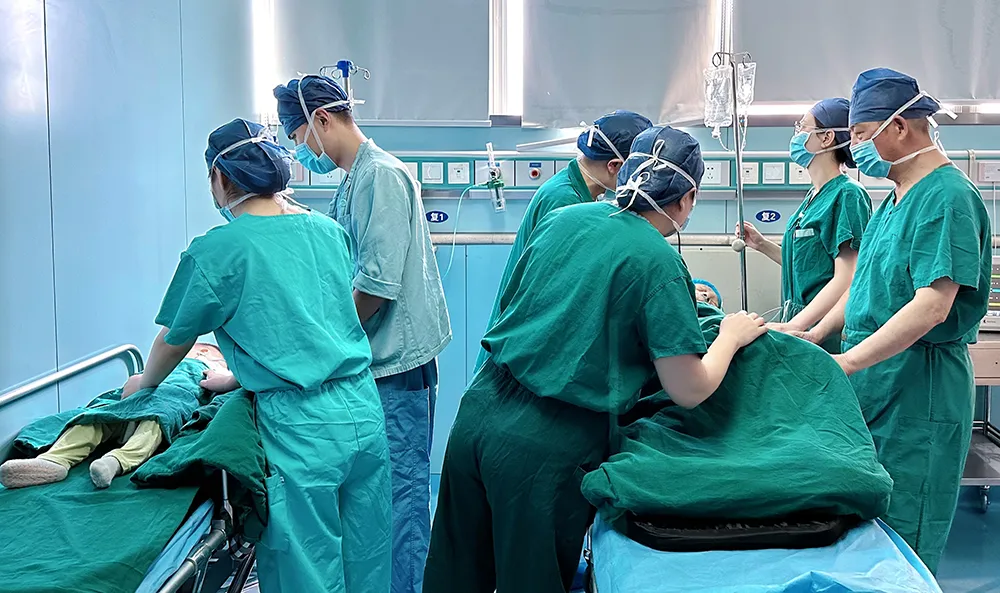
The Longhua approach reframes the objective: instead of removing the tract in one operation, it converts the fistula into a controlled, continuously drained wound that heals by granulation from the inside. That takes weeks rather than days, and requires the patient to return for thread changes and irrigation — the cost of preserving function [4].
What the evidence supports
The department reports that multicentre clinical studies show the combined approach significantly reduced postoperative recurrence, shortened healing time and preserved anal form and function, with some Crohn's-related fistulas having better function after treatment than before [3]. The technique also underpins the group's necrotizing fasciitis protocol [4].
Decades of use and a national technology designation are not the same as randomised evidence. The published support is largely single-centre cohort and multicentre observational work, and comparisons against fistulotomy or LIFT are not clearly randomised in the sources reviewed. Healing times of several weeks are a real burden, and the outcome that matters most — long-term continence, measured with validated scores — is inconsistently reported. Patients considering it should ask specifically for continence data, not just recurrence rates [3][4].
The condition in context: anal fistula
Fistula is common, frequently recurs, and is a major cause of morbidity in Crohn's disease.
| Region | What the data shows | Source |
|---|---|---|
| Case mix | Longhua performs more than 6,000 operations a year, over half for fistula, with 45% complex [3]. | Longhua Hospital [3] |
| Growing subgroups | Crohn's-related, recurrent, infant and leukaemia-associated fistulas are increasing [3]. | Longhua Hospital [3] |
| Overseas demand | Foreign patient numbers rose about 5% year on year [3]. | Longhua Hospital [3] |
Because recurrence after standard surgery is common, a technique that preserves the sphincter while reducing recurrence addresses both failure modes at once [3][4].
Why it matters
| For the patient | What the report suggests | Source |
|---|---|---|
| Continence | The sphincter is not divided [2][5]. | [2][5] |
| Recurrence | Reported reduction in multicentre work [3]. | [3] |
| Burden | Weeks of dressing changes and clinic visits [4]. | [4] |
Availability and limits
- This is an editorial summary of hospital and award reporting, not a treatment recommendation [1][3].
- Evidence is largely observational [3][4].
- Requires skilled thread management and patient compliance [4].
- Healing takes weeks, longer than fistulotomy [4].
- Crohn's-related fistula needs concurrent medical therapy [3].
What to ask before booking
| Question | Why it matters |
|---|---|
| What is my fistula anatomy on MRI or endoanal ultrasound? | Complexity determines whether a sphincter-sparing approach is needed [3]. |
| What are your continence outcomes, not just recurrence rates? | Function is the point of the technique [4]. |
| Which department handles foreign patients, and in what language? | Longhua is a working hospital we do not book; confirm international-department coordination and language support. |
| How many visits will the treatment require? | Thread therapy needs repeated review [4]. |
Questions patients ask
What is drag-thread therapy?
Medicated silk threads are passed through the fistula tract, corroding and draining it gradually while leaving the sphincter intact — 'a thread instead of a knife' [2][5].
Who developed it?
Lu Jingen of Longhua Hospital, fourth-generation inheritor of Shanghai's Gu's surgery tradition [2][5].
Is it officially recognised?
Yes — it is among the National Administration of Traditional Chinese Medicine's first batch of clinical appropriate technologies and appears in eight national textbooks [2][5].
Does it work better than surgery?
Reported recurrence is lower and continence better preserved, but the evidence is largely observational rather than randomised [3][4].
Is this relevant to international patients?
It is useful context for China's proctology practice. Longhua is a working hospital we do not book — contact its international department directly [1].