
Quick answer
An international department sells time, language, order and privacy. It does not sell a better surgeon, a better operating theatre or a better outcome, because those things were never divided by price inside the same hospital. In Beijing, a consultation at a children's hospital international wing costs 1,000–1,500 yuan against 50–100 yuan for the same doctor in the ordinary clinic; overall charges run 3–10 times the insured price, and 8–10 times for surgery and treatment items [1].
Key takeaways
- The gap is in the pathway, not in the technique: same doctors, same theatres, same pathology, same ICU [1][4].
- Public hospitals may run premium services only up to 10% of total volume, a ceiling set in 2009 and reinforced in 2025 [2].
- Premium care is fully self-paid and priced by the hospital, outside the insurance system [1][3].
- What you actually buy: separate appointment slots, English support, coordinated workup, single rooms.
- Not every “international department” is hospital-run; some are co-managed or outsourced, with different teams and prices.
Two price lists, one doctor
| Item | Ordinary clinic | International wing |
|---|---|---|
| Consultation, Beijing children's hospital, same doctor | 50–100 yuan | 1,000–1,500 yuan [1] |
| Consultation, a tertiary international centre | — | 200–600 yuan [1] |
| Overall charges | Insured price | 3–10 times [1] |
| Surgery and treatment items | Insured price | 8–10 times [1] |
Same operation, same theatre, same anaesthetist. The bill can differ tenfold. What differs is the route you take through the building.
Why the arrangement exists at all
Public hospitals are allowed to run premium and international services under three conditions:
A ceiling. Premium services, including international care, may not exceed 10% of total volume. The rule dates from the 2009 health reform and the 2015 urban public hospital reform; in 2025 the tertiary hospital performance monitoring split it into three separate indicators — outpatient volume, inpatient volume and revenue — each capped at 10% [2][5].
No insurance. It is fully self-paid, priced by the hospital, outside the medical insurance pool. Beijing formally liberalised these prices in 2021 [3].
Physical separation. Separate appointment slots, separate consulting rooms, in some hospitals separate equipment, separate billing [4].
In other words, the designers of the system classified this correctly from the start: a market-priced service for a minority, not an upgraded version of basic care. It is permitted precisely because it does not consume the ordinary patient's resources.
What the extra money buys
| You get | Why it matters |
|---|---|
| Separate appointment slots and scheduling | Consultants staff the international wing outside their ordinary clinic hours, so appointments are available and waits are shorter [4] |
| English and a guide | Reception, consent, discharge instructions and reports in a language you can act on |
| Coordination | Registration, imaging, consultation and admission sequenced in one visit instead of five separate trips |
| Environment and privacy | Single rooms, separate corridors, space for a companion |
For a patient who does not speak Chinese and has no one to run errands, these are not luxuries. They are the difference between a plan that works and one that collapses in a corridor.
What the extra money does not buy
- The doctor. Almost certainly the same person, in a different room at a different hour.
- The operation. Same theatre, same pathology laboratory, same intensive care unit. Surgical quality does not change with the invoice.
- The multidisciplinary meeting. These are organised by disease, not by payment tier. The international wing can get you into one faster; it cannot change what the meeting concludes.
- The outcome. Complication rates, survival and recurrence are not set by which waiting room you sat in.
A risk that is easy to miss
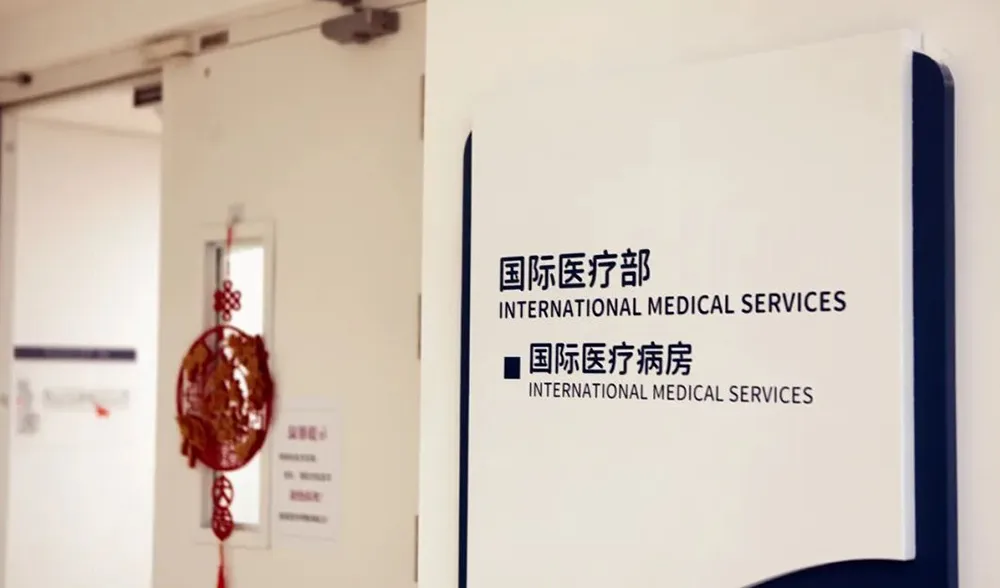
Not every “international department” is run by the hospital. Some are co-managed or outsourced, with their own teams, price lists and service standards.
Two questions settle it. Is this a department of the hospital, or a partnership operating inside it? And is the consultant you are seeing employed by the hospital — can you find their ordinary clinic schedule? If you cannot find them in the hospital's own clinic timetable, you are not buying a faster route through the hospital; you are buying a different provider that happens to share the address.
Three things people confuse
| What it is | Who runs it | Price | |
|---|---|---|---|
| Premium clinic | A higher-priced outpatient channel inside a public hospital | The hospital | 3–10 times the insured price [1] |
| International department | The foreign-patient part of that premium service, usually with English support and a separate ward | The hospital, occasionally a partner | The same, or higher |
| Private international hospital | A separate legal entity, such as United Family or Jiahui | Private capital | Set independently, usually higher |
The first two are channels within one hospital. The third is a different hospital. Comparing all three as if they were the same product produces the wrong conclusion.
When paying more is rational
- You do not speak Chinese and have no reliable companion. The language saving often exceeds the price difference, and a coordination service supplies it for far less than the international surcharge.
- Time matters. Cancer or a progressive disease does not wait for a queue.
- You need several specialties coordinated. In the ordinary clinic you are the coordinator.
- You are travelling with family and need space to recover. The environment difference is real.
When it is not
- A standard elective operation. The same hernia repair, the same cataract; you would be paying ten times for a room, not a result.
- You can run the process yourself. A local friend, a translator, some patience.
- Repeated visits. Chemotherapy or follow-up multiplies the difference by the number of visits.
- You are paying for a better doctor. Then look up that consultant's ordinary clinic schedule instead of buying a slot.
A practical option: use both
The international wing and the ordinary ward are not mutually exclusive.
A common pattern: use the international clinic for decisions — the conversation, the translation, the multidisciplinary review, the agreed plan — and then ask whether admission and surgery can be arranged on an ordinary ward.
Some hospitals allow it; some do not. Ask, do not assume. If it is allowed, you are paying for the decision and saving on the bed, with exactly the same surgeon and the same theatre.
The condition in context: what actually varies with price
Inside one hospital, three things are fixed regardless of what you pay: the operating theatres, the pathology laboratory and the intensive care unit. Those are where outcomes are made.
What does vary with price is the density of human attention: how long a consultation lasts, whether someone walks you to radiology, whether the report is explained rather than handed over.
That is a real good, and worth money to some patients. It is simply not the same good as surgical quality, and confusing the two is how people end up paying ten times for the wrong thing.
Decision checklist
| Question | If yes |
|---|---|
| I do not speak Chinese and have no reliable companion? | A coordination service such as Wellward's costs less than the international wing, with one-to-one support |
| My condition cannot wait? | The international wing is worth it |
| I need several specialties coordinated in one visit? | The international wing is worth it |
| I am having a standard elective operation? | Compare the ordinary ward's total first |
| I will need repeated visits? | Multiply the difference by the number of visits |
| I am paying for a better doctor? | Find that consultant's ordinary clinic schedule |
What to ask before booking
| Question | Why it matters |
|---|---|
| Is this an international department of the hospital, or a partnership operating inside it? | Determines whose team, protocols and prices you are getting. |
| Is my consultant on the hospital's own clinic schedule? | The simplest test of whether the doctor is hospital staff. |
| What is the total for the episode, at international prices? | The multiplier is applied item by item; the total is what matters [1]. |
| Which department handles foreign patients, and in what language? | We do not book treatment; confirm the department and its language support. |
| Can admission and surgery be arranged on an ordinary ward? | Some hospitals allow it, some do not — ask, do not assume. |
Availability and limits
- Prices quoted are published examples, not a schedule; each hospital sets its own [1][3].
- The 10% ceiling is a policy constraint on hospitals, not a guarantee about any individual case [2].
- We describe a structural feature of the Chinese system; we do not rank hospitals or departments.
- We are a coordination service, not a hospital, and do not provide medical treatment.
Questions patients ask
Is the international department better than the ordinary clinic?
It is better service, not better medicine. The doctors, theatres, pathology and ICU are the same; you are paying for faster access, English support, coordination and privacy [1][4].
Why is it so much more expensive?
It is a premium service outside insurance, priced by the hospital. Overall charges run 3-10 times the insured price, and 8-10 times for surgery and treatment items [1].
Does using it take resources from Chinese patients?
Policy caps premium and international services at 10% of a hospital's total volume, with separate appointment slots and billing, which is the condition under which it is allowed to exist [2][4].
Can I use the international clinic for the consultation and an ordinary ward for surgery?
Sometimes. It depends on the hospital. Ask directly before booking, and get the answer in writing if the price difference matters to you.
How do I know whether an international department is hospital-run?
Ask whether it is a department or a partnership, and check whether your consultant appears on the hospital's own clinic schedule. If they do not, it is a different provider operating on the same site.