
Quick answer
Non-acute subdural hematoma — a collection of blood between the brain and its outer membrane — is common in older adults and often recurs after drainage. MAGIC-MT, a prospective, multicentre randomised trial led by Huashan Hospital's Mao Ying and Changhai Hospital's Liu Jianmin across 31 centres, tested adjunctive middle meningeal artery embolization (MMAE). In 722 patients it did not significantly reduce hematoma recurrence or progression at 90 days (6.7% vs 9.9%), but it did significantly lower serious adverse events (6.7% vs 11.6%) [1][2].
Key takeaways
- MMAE is a minimally invasive procedure that injects an embolic agent into the middle meningeal artery to cut the hematoma's blood supply [1].
- The trial randomised 722 symptomatic patients with mass effect: Onyx liquid embolic MMAE (360) versus conventional treatment (362) [2].
- Primary endpoint, hematoma recurrence or progression within 90 days, was 6.7% vs 9.9% (p=0.10) — not statistically significant [2].
- Serious adverse events were significantly lower with embolization (6.7% vs 11.6%, p=0.02) [2].
- In patients not needing burr-hole drainage, and when neurological deaths were counted in the endpoint, MMAE did significantly reduce progression [3].
The problem and the procedure
As populations age, non-acute (subacute and chronic) subdural hematoma has become a growing neurosurgical burden, with high rates of disability and recurrence. Burr-hole drainage is the standard but can recur in 12–20% of patients, and conservative drug treatment is slow and uncertain. MMAE targets the middle meningeal artery that feeds the hematoma membrane, aiming to stop it from re-bleeding [1].
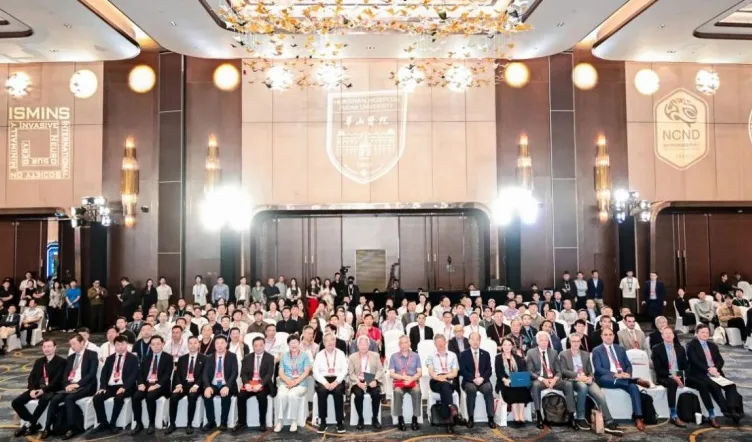
MAGIC-MT was one of three back-to-back randomised trials (with EMBOLISE and STEM) published together in the New England Journal of Medicine, and the largest of them [2][4].
What the trial found
The overall population did not show a significant reduction in the primary recurrence/progression endpoint, but safety favoured embolization. The benefit was clearer in patients managed without burr-hole drainage and when the endpoint included neurological deaths from recurrence or progression [2][3].
This is an honest mixed result: the primary endpoint missed statistical significance, but serious complications fell and subgroups benefited. It argues for selective use — especially in patients who are not having surgery — rather than routine use for everyone [2][3].
The condition in context: non-acute subdural hematoma
Non-acute subdural hematoma is a common, often recurrent condition in older adults, frequently after minor head trauma.
| Region | What the data shows | Source |
|---|---|---|
| Ageing | Falls are a leading cause of injury in older adults, and head injury can lead to subdural bleeding [5]. | World Health Organization [5] |
| Recurrence | Burr-hole drainage recurs in roughly 12–20% of patients, driving interest in adjuncts [1]. | ScienceNet / trial report [1] |
| China | MAGIC-MT ran across 31 Chinese centres with 722 patients, the largest such trial [2]. | China Medical Tribune [2] |
Because recurrence and re-operation are common and costly in frail older patients, any adjunct that reduces complications has value even when it does not lower recurrence overall [2][3].
Why it matters
| Potential | What the report suggests | Source |
|---|---|---|
| Safety | MMAE significantly reduced serious adverse events [2]. | [2] |
| Selective benefit | Clearer benefit in patients not undergoing drainage [3]. | [3] |
| Caution | Primary endpoint not significant overall; it is an adjunct, not a replacement [2]. | [2] |
Availability and limits
- This is an editorial summary of journal, hospital and media reports, not an independent clinical assessment or a booking channel [1][2][3].
- MAGIC-MT is a completed RCT; applying it means selecting patients, not treating everyone with MMAE [2][3].
- The primary endpoint was not statistically significant overall; subgroup findings are hypothesis-generating [2].
- MMAE is a specialist interventional procedure requiring experienced centres [1].
- Burden context describes falls and ageing and comes from WHO, not this trial [5].
What to ask before booking
| Question | Why it matters |
|---|---|
| Is my hematoma acute or non-acute, and do I need drainage? | The trial's benefit was clearest in patients not having burr-hole drainage [3]. |
| Would MMAE be an adjunct to my treatment or an alternative? | It is an adjunct; it does not replace needed surgery [2]. |
| Which department handles foreign patients, and in what language? | Huashan is a working hospital we do not book; confirm international-department coordination and language support. |
| How is imaging and follow-up scheduled around travel? | Subdural hematoma needs serial imaging and review; plan visits accordingly. |
Questions patients ask
What is MAGIC-MT?
A prospective, multicentre randomised trial of adjunctive middle meningeal artery embolization for non-acute subdural hematoma, led by Huashan's Mao Ying and Changhai's Liu Jianmin across 31 centres, published in NEJM [1][2].
What were the results?
In 722 patients, 90-day recurrence or progression was 6.7% with embolization versus 9.9% without (p=0.10, not significant), but serious adverse events were significantly lower (6.7% vs 11.6%, p=0.02) [2].
What is middle meningeal artery embolization?
A minimally invasive procedure that injects an embolic agent into the middle meningeal artery, cutting the blood supply that feeds the hematoma membrane [1].
Where did it help most?
In patients not treated with burr-hole drainage, and when neurological deaths were included in the endpoint, embolization significantly reduced progression [3].
Is this relevant to international patients considering neurosurgical care in China?
It is useful context for China's neurosurgery research. Huashan is a working hospital we do not book — contact its international department directly and confirm candidacy, language support and travel logistics [1][2].