
Quick answer
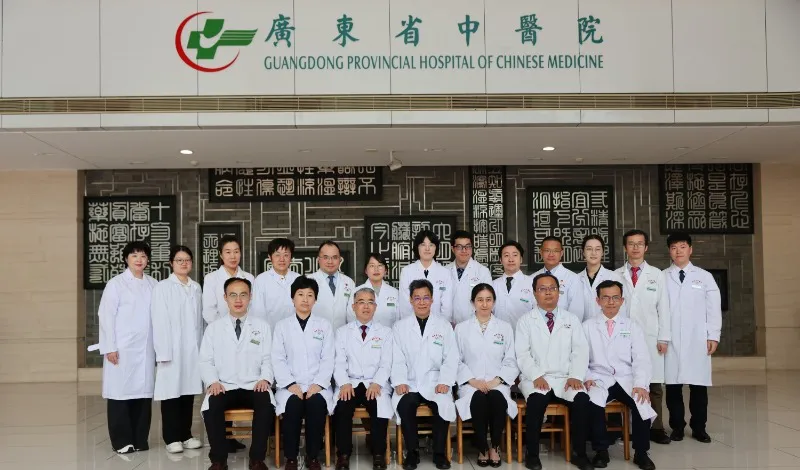
In severe respiratory infection, patients often die of the inflammatory response rather than the pathogen — and in Chinese medicine terms they present with cold limbs and a weak pulse alongside fever. Zhang Zhongde, president of Guangdong Provincial Hospital of Chinese Medicine, built a treatment protocol around that observation, calling it "Fuzheng Jiedu" (support the upright qi, resolve toxin). It was tested in four multicentre trials covering 4,917 patients at 16 centres, reported lower 28-day mortality in severe cases, and won a 2025 China Association of Chinese Medicine science and technology first prize on 25 April 2026 [1][2][5].
Key takeaways
- Theory: deficiency — specifically yang deficiency — is the core pathogenesis of severe infection, and raising yang reduces mortality risk [2][5].
- Evidence: four multicentre clinical studies, 16 centres, 4,917 patients [1][2].
- The core formula significantly reduced 28-day mortality in severe patients [1][3].
- Translation: a hospital preparation became the licensed new drug Wen Yang Jie Du Granules, in a deal worth 100 million yuan [2].
- Also developed: Yinqiao Touxie Jiedu Granules, Jian'er Jiedu Granules and a food-medicine product, Jinju Yin [1][3].
The clinical reasoning
Zhang's starting point was bedside experience in intensive care: patients with severe infection who had been given antibiotics and ventilation were not recovering, and shared a pattern of cold extremities, weak pulse and low vitality. His team's epidemiological work in severe cases found that deficiency — and yang deficiency in particular — was associated with higher mortality [2][5].
The resulting strategy is not simply "clearing heat", the traditional approach to infection, but warming yang while resolving toxin — a combination that senior TCM figures have described as addressing a clinical dilemma: warming without drying, attacking without breaking, supporting without retaining the pathogen [4].
What was shown, and what was not
The programme's strength is scale for a TCM intervention: 4,917 patients across 16 centres is far larger than most herbal medicine trials. The reported primary outcomes are clinical — 28-day mortality in severe infection, and recovery endpoints in mild disease and post-infection cough [1][3].
The award citation and hospital releases give the headline result — lower 28-day mortality — but not the effect size, confidence intervals, randomisation details or blinding. Herbal decoctions are difficult to blind, and co-interventions with conventional care make attribution uncertain. The protocol is now in national and provincial guidelines and in Hong Kong and Macao TCM practice, which is a policy achievement rather than proof of efficacy [3]. Independent replication with full publication is the next step [1][2].
The condition in context: respiratory infection
Respiratory infection is among the WHO's top ten global health threats, and severe cases remain hard to treat.
| Region | What the data shows | Source |
|---|---|---|
| Burden | Respiratory infectious disease is listed by WHO among the ten leading global health threats [3]. | Sina Finance / Nanfang [3] |
| Evidence gap | TCM has extensive clinical experience but weak theory and limited evidence [3]. | Nanfang Daily [3] |
| Translation | The hospital has 68 years of hospital-preparation experience and 337 preparations [2]. | China Hospital CEO [2] |
Because severe viral pneumonia still has few specific treatments, an adjunct that reduces mortality would be clinically important if confirmed [1][3].
Why it matters
| Potential | What the report suggests | Source |
|---|---|---|
| Scale | Nearly 5,000 patients across 16 centres is unusual for TCM trials [1]. | [1] |
| Product | Hospital preparations were translated into a licensed new drug [2]. | [2] |
| Caution | Full trial data are not published in the sources reviewed [3]. | [3] |
Availability and limits
- This is an editorial summary of award and hospital material, not a treatment recommendation [1][2].
- Effect sizes and randomisation methods are not reported in the available sources [3].
- Herbal formulae are not standardised across manufacturers [2].
- Herb-drug interactions and quality control vary [4].
- Guideline inclusion reflects expert consensus as well as evidence [3].
What to ask before booking
| Question | Why it matters |
|---|---|
| Is the full trial published, and in which journal? | Award citations are not a substitute for data [3]. |
| Which preparation would I receive, and is it licensed? | Hospital preparations and licensed drugs differ in regulation [2]. |
| Which department handles foreign patients, and in what language? | The hospital is a working hospital we do not book; confirm international-department coordination and language support. |
| How does this combine with antibiotics and antivirals? | It is an adjunct, not a replacement [1]. |
Questions patients ask
What is Fuzheng Jiedu?
A TCM treatment strategy for respiratory infection that supports upright qi (and specifically warms yang) while resolving toxin, developed by Zhang Zhongde's team [2][5].
What was the evidence base?
Four multicentre clinical studies covering 4,917 patients at 16 centres, reporting lower 28-day mortality in severe infection [1][2].
What award did it win?
A 2025 China Association of Chinese Medicine science and technology first prize, announced on 25 April 2026 [1][3].
Was a drug developed?
Yes — the core formula became the licensed new drug Wen Yang Jie Du Granules, in a 100 million yuan translation deal [2].
Is this relevant to international patients?
It is useful context for China's integrative respiratory care. The hospital is a working hospital we do not book — contact its international department directly [1].