
Quick answer
On 3 September 2026, the cardiac surgery team at Children's Hospital, Zhejiang University School of Medicine, led by Fan Xiangming, implanted a magnetically levitated artificial heart (Corheart 6 left ventricular assist device) in an 11-year-old boy, Xiaolong, who weighed only 21.1 kg and had end-stage heart failure from dilated cardiomyopathy. The hospital reports it as the world's lowest-weight implantation of the smallest magnetic-levitation artificial heart; he left ICU five days later [1][2].
Key takeaways
- The boy, 11, had dilated cardiomyopathy and was at the edge of heart failure; three years earlier a metabolic/developmental disorder had been suspected [1].
- Small children usually lack suitably tiny artificial hearts, so this implant pushed the device below its usual weight limit [1][4].
- During surgery the heart was markedly enlarged with extensive fibrosis; the team precisely implanted the ventricular assist device [1].
- He was out of ICU in five days, past the most dangerous phase, with monitoring gradually stabilising [1][2].
- The pump is a "bridge": it unloads the failing heart and buys time while waiting for a donor heart for transplant [3].
The case
Dilated cardiomyopathy weakens and enlarges the heart until it can no longer pump. For children with end-stage failure, options are limited: donor hearts are scarce, and many children are too small for existing artificial hearts. Xiaolong had been unwell for years — first short stature and suspected metabolic disease, then recurrent abdominal pain and vomiting — before the cardiomyopathy was diagnosed as his heart reached failure [1][2].
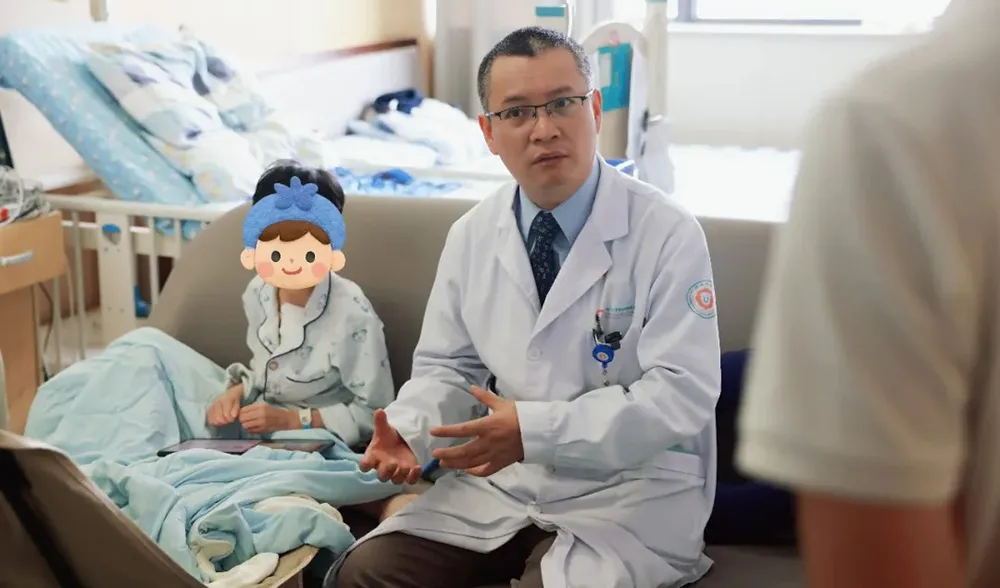
The device is the Corheart 6 left ventricular assist device. Its magnetic levitation reduces mechanical wear and blood damage, and it is one of the smallest such pumps available — but implanting it in a 21.1 kg child still required precise surgical and intensive-care teamwork [1][4].
What was reported
The hospital says the case set a world record for the lowest body weight for implantation of the smallest magnetic-levitation artificial heart. The boy cleared the immediate post-operative period and was transferred out of ICU after five days, with indicators returning to a stable range and mental state improving [1][2].
A ventricular assist device is a bridge to transplant or recovery, not a permanent replacement for a failing heart. It carries risks of bleeding, infection, stroke and device problems, and it must be managed long-term while the child waits for a donor [3].
The condition in context: paediatric heart failure
End-stage heart failure in children is rare but severe, and treatment is constrained by a shortage of donor hearts and of devices sized for small bodies.
| Region | What the data shows | Source |
|---|---|---|
| Global | Cardiovascular disease is the leading cause of death worldwide; heart failure is its end stage [5]. | World Health Organization [5] |
| Children | Small children often lack suitably sized artificial hearts, and donor hearts are scarce [1][4]. | Zhejiang children's hospital [1][4] |
| China | The hospital has repeatedly pushed the lower weight limit for paediatric heart devices and transplant [1][4]. | Zhejiang children's hospital [1][4] |
Because options for the smallest children are so few, a successful implant at record-low weight matters to families with no other bridge to transplant [1][3].
Why it matters
| For the family | What the report suggests | Source |
|---|---|---|
| Life bridge | The pump can sustain a child while waiting for a donor heart [3]. | [3] |
| Access | Pushing the weight limit down may help more small children [1][4]. | [1][4] |
| Caution | It is a high-risk bridge with device complications, not a cure [3]. | [3] |
Availability and limits
- This is an editorial summary of hospital and media reports, not an independent clinical assessment or a booking channel [1][2][3].
- It is a single case report of a record; long-term outcomes and durability in small children are still being observed [1].
- A ventricular assist device is a bridge or destination therapy, not a cure, and carries serious risks [3].
- Suitability depends on the child's size, anatomy and heart failure cause, assessed by a specialist team [1].
- Burden statements describe cardiovascular disease generally and come from WHO, not this case [5].
What to ask before booking
| Question | Why it matters |
|---|---|
| Is my child's heart failure end-stage, and are they a candidate for a device or transplant? | Options depend on size, cause and urgency [1]. |
| Is a suitably sized artificial heart available? | Device size limits many small children [4]. |
| Which department handles foreign patients, and in what language? | This is a working hospital we do not book; confirm international-department coordination and language support. |
| What does long-term device management and transplant work-up involve? | A device is a bridge with ongoing care; plan for an extended stay [3]. |
Questions patients ask
What happened in this case?
An 11-year-old boy weighing 21.1 kg with end-stage dilated cardiomyopathy received a magnetically levitated artificial heart (Corheart 6 LVAD) at Zhejiang University's children's hospital on 3 September 2026; he left ICU five days later [1][2].
Why is the weight significant?
Artificial hearts are usually sized for adults or larger children; implanting one in a 21.1 kg child set a reported world record for the lowest weight and shows the device can serve smaller patients [1][4].
Is the artificial heart a cure?
No. It is a bridge that unloads the failing heart while the child waits for a donor heart, or as destination therapy; it carries risks of bleeding, infection, stroke and device problems [3].
What caused the boy's heart failure?
Dilated cardiomyopathy, which enlarges and weakens the heart; his symptoms had been mistaken for other problems before diagnosis [1].
Is this relevant to international patients considering paediatric cardiac care in China?
It is useful context for China's paediatric heart-failure capability. The hospital is a working hospital we do not book — contact its international department directly and confirm candidacy, language support and travel logistics [1][4].