
Quick answer
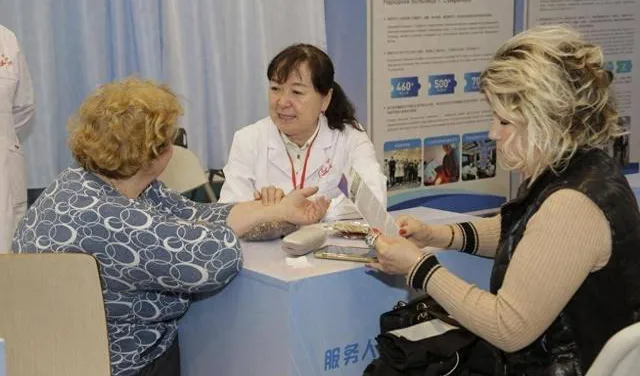
Amie, a British blogger who had previously studied and worked in China, flew to Beijing with two years of unexplained stomach pain. She was seen on 27 November 2025, had a painless gastroscopy on 2 December, had polyps removed during the same procedure, and received a benign pathology result and a follow-up appointment by mid-December — 13 days in total. She paid GBP 298.6 herself, about RMB 2,800 [1][2].
Key takeaways
- Patient: Amie, a British social-media creator who had lived and studied in China, so she knew the system before she boarded the plane [1][2].
- Timeline: first appointment 27 November 2025, gastroscopy 2 December, benign pathology and follow-up inside 13 days [1].
- Five days passed between the doctor ordering the scope and the scope being done — and that gap was her own choice, not the hospital's limit [1].
- Findings: mild oesophagitis and chronic gastritis, with several polyps removed during the procedure [1][3].
- Cost: GBP 298.6 self-pay for the whole episode, against GBP 3,000 to 5,000 quoted for a private endoscopy alone in the UK [2].
What happened, day by day
The sequence below comes from a Beijing Youth Daily reporter who visited the hospital and interviewed the clinicians involved, plus a second account from People's Daily's health desk. Neither piece publishes an itemised bill, and neither reports complications or outcomes beyond the follow-up visit [1][2][3].
| When | What happened |
|---|---|
| Before | Two years of stomach pain in the UK, managed with painkillers; she says a diagnostic appointment at home meant months of waiting [1][2]. |
| 27 Nov 2025 | First appointment in the digestive centre of a Beijing teaching hospital. The consultation lasted about ten minutes; the doctor suspected an upper-gastrointestinal problem and recommended a painless gastroscopy [1]. |
| Same day | Blood tests and an ECG were completed on the spot, which she said surprised her. She then chose 2 December for the scope, because a weekend fell in between [1]. |
| 2 Dec 2025 | Painless gastroscopy under sedation, about 15 minutes of scope time and under an hour from anaesthesia to waking. Findings: mild oesophagitis and chronic gastritis, with several polyps removed during the same pass [1][3]. |
| About one week later | Pathology came back benign. At the follow-up, a breath test ruled out H. pylori and she was given medication to protect the stomach lining [1]. |
| Total | Five days from ordering the scope to having it; 13 days for the whole episode including pathology and follow-up [1]. |
What the bill actually covered
The figure that travelled around social media is a single total, not an itemised receipt. Reported as GBP 298.6, or roughly RMB 2,800 and USD 400, it covers one episode of care rather than one test [1][2].
| Item | Inside the reported total |
|---|---|
| Consultation | Yes |
| Pre-procedure blood tests and ECG | Yes, same day |
| Anaesthetic assessment and sedation | Yes |
| Gastroscopy | Yes |
| Polypectomy during the procedure | Yes |
| Pathology | Yes |
| Follow-up visit and H. pylori breath test | Yes |
The comparison usually quoted is a UK private endoscopy at GBP 3,000 to 5,000. That is a single procedure, not an episode, and NHS care is free at the point of use but comes with its own waiting list. Comparing the two headline numbers directly overstates the gap on one side and understates the wait on the other [2].
She was not a first-time visitor
This is the detail the coverage tends to bury. Amie had studied and worked in China before this trip, and said so when explaining why she chose Beijing [1][2]. That matters more than the price difference: it means she already knew how to register at a hospital, how payment works, what to bring, and probably had enough Chinese or enough local help to navigate a busy outpatient building.
A patient arriving from Europe for the first time, without Mandarin and without a local contact, should not read the 13-day figure as a service level. The same hospital runs an international department with English-language booking, but using it is a different pathway from the one described here [4].
What this case shows, and what it does not
It shows that a straightforward diagnostic question can be resolved quickly when appointments, bloods, anaesthesia assessment and the procedure itself are compressed into one week, and that the price of that episode is small enough to be paid out of pocket [1][2].
It does not show that foreign patients jump the queue. The hospital's own clinicians pushed back on that reading: the attending physician said the pathway was identical to any other patient, and the deputy head of the international department noted that international and premium services are capped at about 10% of a public hospital's volume, with the same appointment system [1][6].
It also does not show that 13 days is typical. The scoping doctor's own remark is the most useful corrective: some patients are scoped the next day, and this patient was not among the fastest [1].
The condition in context: what a gastroscopy answers
A gastroscopy looks directly at the oesophagus, stomach and the first part of the small intestine, and can take tissue or remove polyps in the same session. In this case the procedure converted two years of symptoms into a named diagnosis: mild inflammation of the oesophagus with chronic gastritis, plus polyps that turned out benign [1][3].
| Question | What the reports say | Source |
|---|---|---|
| How long does the procedure take? | About 15 minutes of scope time; under an hour from sedation to waking | [1] |
| Can it treat as well as diagnose? | Yes for polyps — several were removed during the same pass | [1][3] |
| How long for pathology? | About one week | [1] |
| What else was checked? | A breath test for H. pylori at follow-up | [1] |
If you were flying in for a gastroscopy: what to arrange
- Decide which pathway you are on. The ordinary outpatient route is cheaper and slower to organise from abroad; the international department costs more and speaks English. They are not the same service [4].
- Book the pre-procedure tests into your trip. Bloods, ECG and anaesthetic review have to happen before sedation, and in this case they were done on the first day, which is what made a five-day turnaround possible [1].
- Leave room for pathology. A benign result took about a week; a biopsy that needs review can take longer, so do not book a flight home for the day after the scope [1].
- Ask what the quote covers. Polypectomy, pathology and the follow-up visit can each be billed separately at some hospitals; the reported total here included them [1][2].
- Check visa timing first. China has no medical-visa category, and the entry route you use determines how long you can stay for tests and review [5].
Availability and limits
- This is an editorial summary of newspaper reporting, not a clinical record or a recommendation [1][2].
- One patient, whose bill is self-reported and was checked by a newspaper rather than audited [2].
- No complication data, no comparison group, and no outcome beyond the follow-up visit [1].
- The patient had prior experience of the Chinese health system, which reduced the logistical burden considerably [1][2].
- Prices in this article are the figures reported at the time and will change [1][2].
- A gastroscopy is a common diagnostic procedure; do not generalise the timeline to surgery or cancer care [3].
What to ask before booking
| Question | Why it matters |
|---|---|
| Is this the international department or the ordinary outpatient clinic? | Price, language support and waiting time differ [4]. |
| Are bloods, ECG, anaesthesia review and the scope all in one visit? | Batching them is what produced the five-day turnaround here [1]. |
| Which department handles foreign patients, and in what language? | The hospital is a working hospital we do not book; confirm international-department coordination and language support. |
| Does the quote include polypectomy, pathology and the follow-up? | Otherwise the headline price is only the scope [1][2]. |
| How long should I stay after the procedure? | Pathology took about a week in this case [1]. |
Questions patients ask
How much did the gastroscopy cost?
GBP 298.6 in total, about RMB 2,800, paid by the patient herself. That figure covers the consultation, pre-procedure tests, sedation, the scope, polyp removal, pathology and the follow-up visit, according to the reports [1][2].
How long did it take from first appointment to results?
13 days: first appointment on 27 November 2025, gastroscopy on 2 December, benign pathology and a follow-up visit by mid-December. Five days passed between the scope being ordered and being performed [1].
Do foreign patients get seen faster in China?
The clinicians involved said no: the pathway was the same as for any other patient, and international and premium services are capped at roughly 10% of a public hospital's volume [1][6].
Can I do this without speaking Chinese?
The hospital runs an international department with English-language booking and accompaniment, which is a different, more expensive pathway from the ordinary outpatient route described in this case [4].
What did the gastroscopy find?
Mild oesophagitis and chronic gastritis, with several polyps removed during the procedure. Pathology came back benign about a week later, and a breath test at follow-up ruled out H. pylori [1][3].