
Quick answer
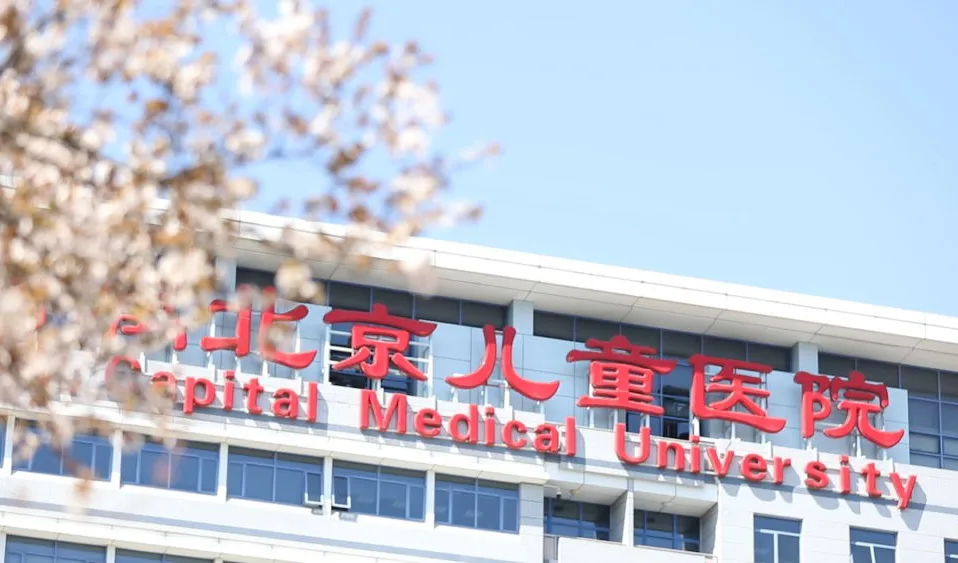
Acute graft-versus-host disease (aGVHD) is the most feared complication of allogeneic stem cell transplantation: donor immune cells attack the recipient's skin, gut and liver. Steroids are first-line, but about half of children become steroid-refractory, and their two-year survival is only 25–43%. A project led by Zheng Jie at Beijing Children's Hospital will test mesenchymal stromal cells derived from human embryonic stem cells in these children; it passed National Health Commission filing under China's new biomedical technology rules [1][2].
Key takeaways
- Project: efficacy and safety of human embryonic stem cell-derived mesenchymal stromal cells in paediatric aGVHD [1].
- It is Beijing Children's Hospital's first stem cell study filed under the new regulation [1].
- The regulation (State Council Order 818) took effect on 1 May 2026 [1][3].
- Primary endpoint is overall response rate (complete plus partial response) [4].
- Only about 10 of 112 filed projects have been registered under the new rules [2].
The clinical problem
aGVHD affects skin, gastrointestinal tract and liver and can progress to multi-organ failure. Corticosteroids control roughly half of cases; the other half need second-line therapy, for which no single standard exists. In children the burden is especially high because they have the most years at risk from both the disease and its treatment [1].
Mesenchymal stromal cells are attractive here because they are immunosuppressive without being broadly cytotoxic, and they can be given off-the-shelf rather than manufactured per patient. Deriving them from human embryonic stem cells gives a uniform, scalable source, which is the practical advantage over donor-derived cells [1][2].
What the study will do
The trial is registered with a primary endpoint of overall response rate, and will assess safety alongside efficacy. It is a filed clinical study under the new regulation rather than a marketed product, which means patients are enrolled under a protocol with ethics and academic review, not treated as routine care [1][4].
Registration under Order 818 means the project met requirements for academic review, ethics approval and product quality systems — it does not mean the therapy works. Chinese regulators have emphasised that unapproved stem cell products cannot be used clinically or sold to patients, a warning issued repeatedly because of clinic marketing [5]. Results from this trial will take years [1][5].
The condition in context: acute GVHD
As transplant volumes grow, aGVHD remains the main driver of transplant-related mortality.
| Region | What the data shows | Source |
|---|---|---|
| Steroid failure | About 50% of children develop steroid-refractory aGVHD [1]. | Beijing Children's Hospital [1] |
| Prognosis | Two-year overall survival in steroid-refractory disease is 25–43% [1]. | Beijing Children's Hospital [1] |
| Regulation | China's biomedical technology regulation took effect 1 May 2026 [3]. | Stem cell policy review [3] |
Because second-line options are limited and inconsistent, a standardised off-the-shelf cell product would be clinically useful if it proves effective [1].
Why it matters
| Potential | What the report suggests | Source |
|---|---|---|
| Uniform product | Embryonic stem cell-derived cells offer a scalable, consistent source [2]. | [2] |
| Paediatric focus | A dedicated paediatric trial in a neglected indication [1]. | [1] |
| Caution | No efficacy data yet; filing is not approval [5]. | [5] |
Availability and limits
- This is an editorial summary of regulatory and hospital announcements, not a treatment offer [1][2].
- The therapy is investigational and available only within the study [1].
- No results have been reported [4].
- Patients should beware unapproved stem cell offerings marketed directly to families [5].
- Eligibility requires steroid-refractory aGVHD after allogeneic transplant [1].
What to ask before booking
| Question | Why it matters |
|---|---|
| Is the aGVHD steroid-refractory? | The trial targets that group [1]. |
| Is the study enrolling, and under which filing number? | Filing can be verified with the NHC [1]. |
| Which department handles foreign patients, and in what language? | Beijing Children's Hospital is a working hospital we do not book; confirm international-department coordination and language support. |
| What alternatives exist if I am ineligible? | Second-line options vary; discuss with the transplant team [1]. |
Questions patients ask
What was filed?
A clinical study of human embryonic stem cell-derived mesenchymal stromal cells for children with acute graft-versus-host disease, filed with the National Health Commission [1].
Why does filing matter?
It is the first project at Beijing Children's Hospital cleared under China's new biomedical technology regulation, which took effect on 1 May 2026 [1][3].
Has it been shown to work?
No — the study is registered but no results are reported [4].
Who is eligible?
Children with aGVHD, particularly steroid-refractory disease, after allogeneic transplant [1].
Is this relevant to international patients?
It is useful context for China's cell therapy regulation. The hospital is a working hospital we do not book — contact it directly [1].