
Bring the right records. Leave with the right evidence.
Three things decide whether your file is usable: what you carry in, what you carry out, and who is allowed to release it. Most of the delays we see are paperwork, not medicine.
Before you come
Three kinds of material, and they are not interchangeable. Arriving with one of the three is the most common reason a consultation ends in “we need more”.
| Material | What it actually is | Where to get it | If you arrive without it |
|---|---|---|---|
| Records | Discharge summary, operative note, clinic notes, laboratory results | Records room (病案室) or the clinic that treated you | The specialist cannot see your treatment history and may repeat tests |
| Imaging | DICOM data — the full series, not a film, not a screenshot | Cloud imaging link from the report, hospital export, or disk | No reconstruction, no measurement; the scan is “looked at”, not read |
| Pathology | Report, plus slides if the diagnosis will be re-read | Pathology department | No second read — which for cancer is often the whole point |
Imaging: assume it is in the cloud now
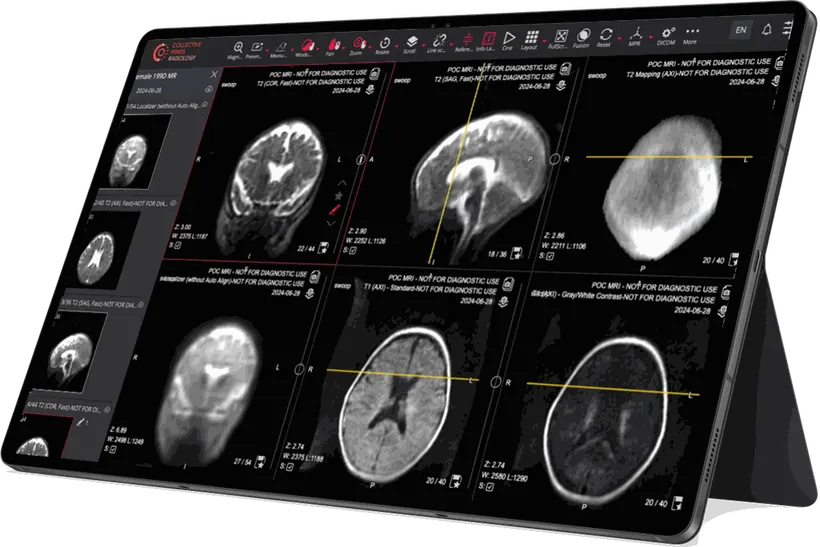
Since 2025 many Chinese hospitals have stopped printing film by default and publish the study online instead: a QR code on the report, or the hospital’s WeChat account. What you want from that link is the original DICOM series, not a JPEG of a film.
- The cloud link usually expires, and often needs the last six digits of your ID or the last four of your phone number to open. Download it the same day.
- If the hospital still issues disks, take one — but do not assume you will find a drive that reads it.
- USB export is sometimes possible at the imaging department, on request, sometimes for a fee.
- Photographing a film with your phone is the worst option: it throws away the data the specialist needs.
Pathology: the slide is borrowed, not given
If the diagnosis will be reviewed again — a second opinion, a multidisciplinary meeting, a trial — the receiving hospital needs the physical slides. The request runs the other way from what most patients expect: the receiving hospital’s pathology department issues the borrowing form, and your original hospital releases the slides against it.
- The receiving hospital issues a slide-borrowing form, listing the case numbers it wants.
- Take your ID, the pathology report and that form to the original hospital’s pathology department.
- Pay a deposit — commonly around ¥100 per slide, and it differs by hospital.
- Return the slides with the deposit slip and a copy of the outside consultation report, usually within two to four weeks.
Name and index everything
One folder, one index sheet on top. Use 2026-09-14_CT-chest_PUMCH rather than IMG_2311. The index should say what each file is, which hospital produced it and the date — the person reading your file at the other end will be reading it in a second language.
The checklist
- Discharge summary, stamped
- Operative record
- Clinic notes
- Laboratory results
- Imaging: full DICOM series
- Imaging reports
- Pathology report
- Slides or blank slides, if a re-read is needed
- Diagnosis certificate, stamped
- Authorisation letter, if someone else is acting for you
After you leave
The evidence you take home decides whether an insurer pays and whether your own doctor can act on what was done.
The first 48 hours: four documents
- Discharge summary, with the hospital stamp
- Diagnosis certificate, stamped — the single document most often missing
- Itemised bill, line by line
- Official invoice (the finance-ministry medical receipt), original
Seven working days later: the full record
Hospitals normally release copies once the record is complete and filed — commonly seven working days after discharge, sometimes two weeks. Go to the records room with your passport (and an authorisation letter if you are acting for someone else), and ask for the copies to be stamped. Without the stamp they are just photocopies.
Back up in three layers
| Layer | Where | Why |
|---|---|---|
| Original | Encrypted drive, plus your own cloud account | The only copy that has not been re-encoded |
| Working | Phone or tablet, offline | To show a doctor without opening a laptop |
| Hand-over | What you send to your insurer or your own doctor | Only that episode, stripped of anything unrelated |
Three ways an image archive is lost
- The link expires before you get home — the study is gone unless you downloaded it.
- You kept JPEGs exported from a viewer: no reconstruction, no measurement, no use.
- You never counted: half the series is missing and nobody notices until a radiologist asks for the venous phase.
Before you leave, open the folder and count the series against the items on the report. It takes four minutes.
Your rights over your own records
Under the 2013 national rules on medical records, a patient has a right to copies. In practice the counter asks for the right papers, and pays attention to the stamp.
Who can apply
| Applicant | What they must bring |
|---|---|
| The patient | Valid identity document, original |
| An authorised representative | Both identity documents, plus a signed authorisation letter |
| Heirs of a deceased patient | Death certificate, proof of relationship, identity documents |
| An insurer | Policy copy, letter of introduction, staff ID, the patient’s authorisation |
Time, cost, and the stamp
- Timing: generally seven working days after discharge; some hospitals ask for two weeks.
- Cost: a copying fee, commonly about ¥0.2 per A4 page.
- Stamp: ask for the copies to be stamped by the records room or the medical affairs office. This is what makes them acceptable to an insurer or a clinician abroad.
What you can copy
In practice the objective parts are released: temperature chart, physician orders, laboratory results, imaging reports, operation and anaesthesia records, pathology report, nursing notes, discharge record. Parts that contain clinicians’ internal reasoning are handled differently from hospital to hospital — ask the records room what it releases rather than relying on a general rule.
Taking records out of the country
Your medical record is sensitive personal information. Sending it abroad, or handing it to a clinician in another country, requires your consent, and some hospitals ask for that in writing. We can organise and translate a file for you; we cannot consent on your behalf.
Not sure your file is complete?
For $59 we read what you have, tell you what is missing for a useful opinion, and return three hospitals compared for your case — costs, timing and the doctors to ask for — within 48 hours. If your file is not yet good enough, that is the first thing we will say.
What patients ask
Is a phone photo of the film good enough?
No. The specialist needs the series to window, measure and reconstruct. A photo of a film is a picture of a picture.
How long does a cloud imaging link last?
It varies by hospital and it is rarely stated. Treat it as days, not months, and download on the day of the scan.
Can the slides be couriered?
Some hospitals allow it, many want the borrower at the counter. Call the pathology department before you plan a trip.
How many copies should I ask for?
Three: insurer, your own doctor, and one to keep untouched.
Does a Chinese record need to be notarised?
Usually not. It may need a certified translation if an insurer or a visa authority asks for one.
What if the hospital refuses to release records?
Put the request in writing to the records room, then to the hospital’s medical affairs office. The 2013 rules set out who may apply and what must be provided.
Where this comes from
Rules on copying records: 医疗机构病历管理规定(2013 年版), 国卫医发〔2013〕31 号, National Health Commission. Slide-borrowing practice: Shanghai Municipal Health Commission, “向病理科借阅切片 8 问” (2024). Hospital practice on cloud imaging and film charges differs by province and by hospital; where it does, we say so.