
The world's first congenital deafness gene therapy trial, with long-term data
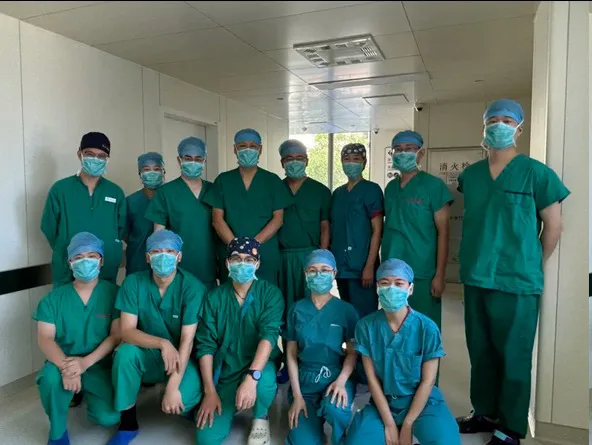
On 22 April 2026, the journal Nature published the 2.5-year multicentre follow-up of the world’s first gene therapy clinical trial for congenital deafness. The therapy, AAV-hOTOF, targets deafness caused by mutations in the OTOF gene (DFNB9). PUMCH was one of eight core units across China, having joined the RRG-003 AAV study in July 2024; its otolaryngology team, led by principal investigators Gao Zhiqiang and Feng Guodong, handled participant recruitment, treatment, follow-up and data collection with a multidisciplinary team spanning anaesthesia, neurology, paediatrics and radiology.
What the 2.5-year data showed
The report summarises hearing outcomes that are notably strong for a first-in-human gene therapy programme, though they come from a trial population under specialist follow-up.
90% of participants achieved clinically meaningful hearing recovery, with improvement gradual and stable over time. Among participants completing 2.5-year follow-up, all recovered to the level of recognising everyday conversational speech; 57% could identify quiet library-level sounds and 43% could hear whispers. Two of three adult participants also improved. Response varied by age: 100% in children aged 0.5–3 years, 92% at ages 3–8, and 60% at ages 8–18. Baseline otoacoustic emissions (DPOAE) at more frequencies predicted better outcomes, and the therapy appeared applicable across OTOF mutation types.
What this is — and is not
This is a trial-stage therapy for a specific genetic cause of deafness — OTOF mutations account for only a fraction of congenital hearing loss. The published account describes the treatment as safe and effective within the study, but routine clinical availability, long-term durability beyond 2.5 years, and results outside specialist trial centres remain open questions. It does not apply to deafness from other genetic or acquired causes.
What comes next
The multicentre programme continues to expand. PUMCH’s report does not state when the therapy might become routinely available or at what cost. For now, access runs through specialised centres and approved clinical studies rather than standard ENT clinics.
Relevance for families
For parents of children with congenital hearing loss, the study underlines two practical points: genetic testing identifies whether a child’s deafness matches the therapy’s target, and early diagnosis matters because younger children showed the strongest responses. This falls under Wellward China’s Children's, Congenital & Genetic and Ear, Nose & Throat health areas. This page is general information, not medical advice.